
In a commercial kitchen, your pots and pans will tell the real story of the shift. Burnt-on sauces, baked-on starches, grease buildup, and protein residue all end up in the pot sink long before they ever reach a dish machine.
This area likely handles the heaviest soils, greasiest residues, and most physically demanding cleaning tasks in your kitchen. And if you choose the wrong pot and pan detergent for your workflow, it can quickly become a bottleneck.
There are two major forms you can expect to see in commercial settings: concentrated pot and pan detergents and ready-to-use pot and pan detergents. Both can be effective solutions, but they shine in very different environments.
The real differences between these two formats show up in how they’re used, managed, stored, and supported day to day. Depending on your kitchen, one option may save time, reduce training requirements, minimize waste, or lower long-term costs.
In this article, we’ll break down how concentrates and ready-to-use formulas compare, where each one performs best, and how to decide which option supports your kitchen’s workflow.
Let’s get started!
Key Comparison Factors
To evaluate commercial pot and pan detergents, we’ll compare them across six core categories. These will help you determine everything from your budget to your training needs to best use cases.
| KEY COMPARISON FACTOR | EXPLANATION |
| Cost Efficiency | How overall product cost compares when you consider purchase price, dilution rate, dosage accuracy, and long-term usage |
| Storage Requirements | How much kitchen and inventory space you need for each type |
| Labor & Training | How easy the product is for staff to use correctly, especially across shifts, language barriers, or turnover |
| Safety & Chemical Handling | How the detergent format affects exposure, spill risk, and PPE needs |
| Consistency & Dilution Accuracy | How reliably the detergent performs, including the risk of mis-dilution |
| Environmental Impact | How the product affects waste output, packaging usage, and overall sustainability goals |
| Best Use Cases | In what situations is each pot and pan detergent a good fit |
Keep these factors in mind as we continue. Now, let’s break down how each detergent type performs.
Concentrate Commercial Pot and Pan Detergents
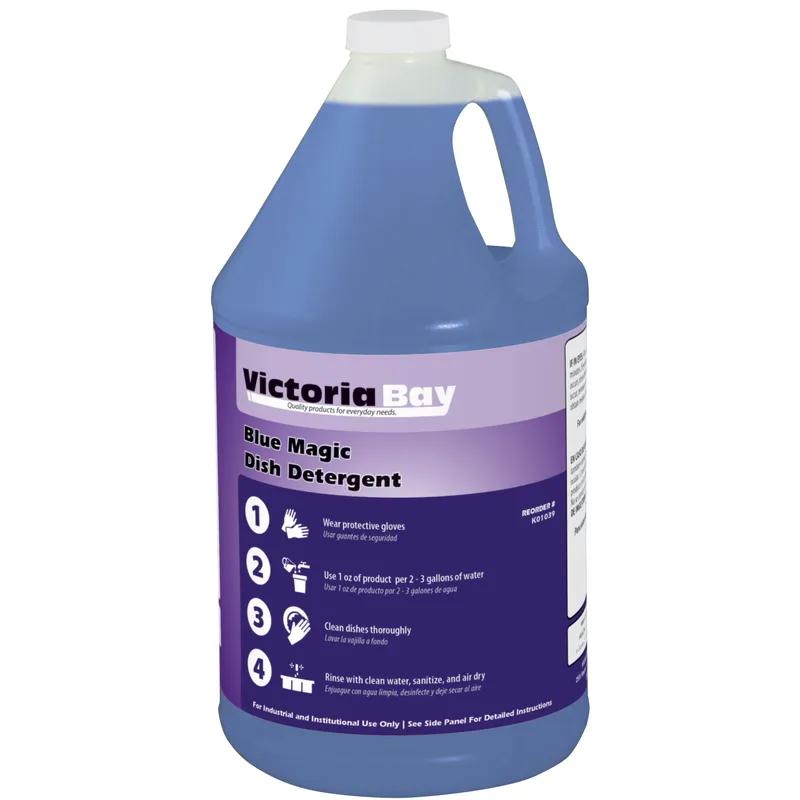
Concentrated pot and pan detergents are ultra-potent formulas designed to be diluted at the point of use, either manually or through an automated dispensing system. These systems are great to have because they automatically and precisely mix the detergent with water to create the correct solution ratio for cleaning your pots and pans.
Concentrates are most commonly used in medium-to-high volume commercial kitchens, where efficiency, storage space, and long-term cost control matter most, but they can also be found in smaller operations that are focused on controlling long-term costs.
Cost Efficiency
Concentrates typically offer the lowest in use cost per diluted gallon. Because you’re buying the product in a highly potent state, you aren’t paying for anything extra: water, packaging, or more frequent replacements. With proper dilution control, concentrate detergents can significantly reduce your chemical spend over time.
However, the key phrase here is “with proper dilution control.” Without an automatic dispenser, or if your staff attempts to dilute the chemical by hand, those savings can disappear quickly. Even small mismeasurements add up over time and can lead to wasted product or poor cleaning performance.
Storage & Space Requirements
Concentrates typically take up far less storage space than ready-to-use products because each bottle, jug, or bag-in-box of concentrate can produce many more sinks’ worth of detergent than a ready-to-use product. Most concentrated pot and pan detergents require as little as one-third or one-quarter of the storage space needed compared to RTU formats.
This makes concentrates ideal for:
- Tight back-of-house storage rooms
- High-volume facilities that constantly need restocking
- Operations looking to streamline their inventory
Labor & Training
Once your automatic dispensing system is installed, concentrated detergents are incredibly simple for staff to use and require no manual measuring, mixing, or guesswork.
This reduces training requirements and lowers the risk of making mistakes, which is an especially important advantage in high-turnover environments.
However, managing the dispensing equipment itself does require some occasional training and service, so your team should know how to identify basic issues like empty containers, clogs, or incorrect feed.
Safety & Chemical Handling

Because concentrates are stronger, they create a higher and more dangerous chemical exposure risk if they are mishandled.
Pro Tip: Staff should always wear PPE, including safety goggles, chemical gloves, shoe covers, and a chemical-resistant apron, when handling or replacing containers or disconnecting lines.
But once the detergent is actually diluted in the sink, the solution is safe for routine pot and pan washing with minimal direct chemical contact.
Consistency & Dilution Accuracy
If you’re using an automatic dispenser, concentrates deliver outstanding consistency.
The dispenser will dose the correct amount of detergent for each sink, meaning you get predictable wash quality, chemical usage, and operating costs.
If manual dilution is involved, which tends to happen in very small operations without standardized procedures, the consistency advantage drops sharply.
Environmental Impact
Concentrates can help you reduce waste because they use:
- Less packaging
- Fewer plastic bottles
- Fewer transportation resources
Most sustainability-focused foodservice operations prefer concentrates over RTU products for this reason.
Best Use Cases
Concentrated pot and pan detergents shine in:
- Medium-to-high volume kitchens
- Facilities with trained staff and standardized procedures
- Operations focused on long-term cost efficiency
- Locations with limited storage space
They aren’t always the best fit for very small kitchens, pop ups, or teams without access to dispensing equipment.
Ready-to-Use (RTU) Commercial Pot and Pan Detergents
Ready-to-Use pot and pan detergents come pre-mixed at the correct concentration. That means there’s no measuring, no dilution, and no chemical mixing required. You simply connect or pour the product and start washing.
RTU detergents are very popular in smaller operations, or operations that prioritize simplicity.
Cost Efficiency
RTU detergents typically cost more per sink because they already contain water and require more packaging. You’re essentially paying for the added convenience.
However, some of the benefits that convenience provides include:
- Zero dilution errors
- Zero wasted product from incorrect mixing
- Highly predictable cost per load
For small or low-volume kitchens, RTU may actually be the more efficient choice because purchasing a dispenser or managing concentrates may not be worth the extra investment.
Storage & Space Requirements
Ready-to-use chemicals typically take up significantly more shelf space and need to be restocked more often than concentrates. Because they come pre-diluted, you need more detergent to wash the same number of sinks.
This can present a challenge for small storage rooms or a crowded back-of-house.
Labor & Training
The biggest advantage of RTU detergents is that they are a virtually foolproof solution.
With these, your team won’t need to learn how to:
- Read dilution charts
- Calibrate dispensers
- Measure chemical dosages
They just need to connect the RTU container or refill the dispenser tank and the detergent is ready to go.
For operations with shorter shifts, many part-time employees, or rotating volunteers (these are common in schools, churches, and event halls), a RTU product is likely the easiest and safest option.
Safety & Chemical Handling
Because their formula is diluted, RTU detergents are gentler and much less dangerous to handle than concentrates. That being said, PPE should still be worn when handling any kind of cleaning chemical or detergent.
The main safety concern with RTU detergents is spill cleanup, because they are more likely to be used manually. However, cleanup is far simpler and presents a much lower hazard than with a concentrated product.
Consistency & Dilution Accuracy
RTU detergents always deliver perfect dilution because they are made pre-mixed. There is virtually no chance of staff overusing or underusing the chemical. This ensures consistent cleaning and sanitizing every time.
However, there is one caveat: If your staff accidentally mixes RTU product with water (which is a common mistake in some operations), performance and efficacy will drop.
Environmental Impact
Ready-to-use detergents have a larger environmental footprint because of their increased:
- Packaging
- Plastic waste
- Shipping weight
- Product replacements
Many manufacturers offer recyclable or reusable containers, but generally speaking, concentrates still win in eco-friendliness.
Best Use Cases
Choose a RTU detergent when:
- You want maximum simplicity
- You operate a small or low-volume kitchen
- Staff turnover is high
- You’re running a small bar, café, or food truck
- You aren’t ready to invest in dispensing equipment
Ready-to-use detergents provide peace of mind for operators who are looking for consistency without the hassle of additional training or managing extra equipment.
Questions to Ask Before Choosing a Commercial Pot & Pan Detergent
Choosing between concentrated and ready-to-use pot and pan detergents comes down to understanding how your kitchen operates, the volume you’re washing, your staff’s training level, and the consistency your operation needs.
If you’re still unsure about which detergent type is right for you, ask yourself these questions to help guide your decision:
- Dish Volume, Soil Load, and Cleaning Demands
- How many pots and pans are we washing per hour or per shift?
- Do we deal with heavy food soils, baked-on grease, or mostly lighter residue?
- Do peak rushes strain our pot sink capacity or chemical usage?
- Staffing, Training, and Workflow Consistency
- How experienced is our staff, and how often does the team turn over?
- Do we prefer a system that’s truly “plug-and-play,” or can our staff handle basic dispenser training?
- Are we looking to eliminate dilution errors entirely?
- Does our workflow rely on fast chemical swaps or long, continuous shifts?
- Equipment and Dispensing Needs
- Do we currently use chemical dispensers at the pot sink?
- If not, are we willing to invest in one for long-term efficiency and cost control?
- Would automated dilution control improve consistency across shifts?
- Are we trying to reduce manual handling of chemicals during busy service hours?
- Storage Space, Back-of-House Layout, and Inventory Capacity
- How much storage space do we have for chemical products?
- Do larger RTU containers crowd the pot sink area or chemical shelves?
- Do we want to reduce reorder frequency by using high-yield concentrates?
- Are we trying to streamline inventory and cut down on container waste?
- Budget, Usage Costs, and Total Cost of Ownership
- Are we more concerned with upfront price or long-term cost per sink?
- Are we currently wasting money due to over-pouring, mis-dilution, or frequent replacement of RTU containers?
- Would the savings from concentrated formulas justify the cost of a dispenser?
- Is predictability more important than maximizing cost efficiency?
- Safety, Chemical Handling, and Employee Exposure
- Do we want to minimize staff handling of stronger concentrated chemicals?
- Are spills or PPE concerns common in our pot sink area?
- Would a gentler, pre-diluted formula create a safer environment for new or rotating staff?
- Sustainability, Waste Reduction, and Packaging Goals
- Are we trying to cut down on plastic waste or reduce the number of empty containers we dispose of?
- Do sustainability commitments make concentrated products more appealing?
- Are we willing to trade higher packaging volume for simpler use and easier handling?
- Operational Priorities and Long-Term Vision
- Do we need a detergent system that grows with increasing volume?
- Are we trying to simplify back-of-house operations as much as possible?
- Do we anticipate staffing changes, layout adjustments, or future equipment upgrades.
If you have high dish volume, tight storage space, or want to reduce long-term chemical costs, concentrated detergents are likely the best fit.
If your team needs maximum simplicity, your kitchen is low-to-moderate volume, or you want consistent cleaning with no dilution needed, ready-to-use detergents can deliver.
Final Tips for Making the Right Detergent Decision
- Match the detergent format to your workflow. High-volume, continuous washing often benefits from concentrates, while intermittent or low-volume washing favors RTU simplicity.
- Think in cost per sink, not cost per container. Concentrates may cost more upfront but often reduce long-term spend when dilution is controlled.
- Don’t underestimate training realities. If dilution errors are common or staff turnover is high, RTU detergents can eliminate costly mistakes.
- Reach out to Imperial Dade: We can provide samples, performance data, and comparisons to kitchens just like yours.
- Evaluate your storage limitations honestly. Concentrates dramatically reduce shelf space and reorder frequency compared to RTU products.
- Factor in safety and handling comfort. Pre-diluted formulas reduce exposure risk, while concentrates require stronger PPE discipline.
- Align detergent choice with sustainability goals. Less packaging and lower shipping weight make concentrates the greener option in most kitchens.
- Plan for consistency across shifts. Dispensers help standardize concentrate use, while RTU ensures consistency without equipment.
- Consider how often chemicals are handled. Fewer container changes can improve efficiency and reduce spill risk.
Final Thoughts
Both concentrated and ready-to use pot and pan detergents play valuable roles in foodservice operations, but the “right” choice ultimately depends on your specific needs and workflow. Understanding the key requirements and differences in dilution control, staff experience, product waste, and overall cost-in-use can make your choice significantly easier.
No matter which detergent option you choose, it can have a real impact on your wash quality, operational consistency, and your team’s day-to-day working experience.
Need help going over your options? Reach out to Imperial Dade! We have local experts who can help you with a free consultation, product recommendations, and samples to help you make the best decision for your kitchen’s specific needs.
Check Out These Related Articles:
- How to Fix a Commercial Dishwasher That Won’t Drain
- How to Fix a Leaking Commercial Dishwasher: Step-by-Step Guide
- Commercial Dishwasher Troubleshooting: A Guide to Dish Machine Repairs
- How to Clean a Commercial Dishwasher: 3 Expert Tips
- 5 Most Common Mistakes in Your Warewashing Program & How to Fix Them
- How to Choose the Right Commercial Dish Machine for Your Business