
Hard water rings are one of the most persistent problems in commercial restrooms. Even in well-maintained facilities, these white, brown, or rust-colored mineral rings can form quickly and make a restroom seem neglected.
For custodians and facility managers, effectively tackling these stains requires the right products, technique, and routine.
In this article, we’ll walk you through a step-by-step approach for removing hard water rings from toilets, along with best practices for prevention.
Why Do Hard Water Rings Form?
The cause lies in the water itself; hard water carries high levels of minerals like calcium, magnesium, and iron, which can settle on the porcelain surface as water evaporates.
Here’s what makes them so difficult to clean:
- The mineral buildup hardens over time. The longer these stains sit, the more difficult they typically become to remove.
- Porcelain is a porous surface. Porcelain absorbs microscopic particles, which can make mineral stains cling tightly.
- Frequent toilet use plays a role. Every flush can leave behind more minerals if water hardness is high.
Tools and Supplies Needed
Before diving into the cleaning steps, gather the right tools. Having the right supplies can make the job faster and more effective.
- PPE (chemical-resistant gloves and safety glasses)
- “Closed for Cleaning” sign
- Acid-based bowl cleaner – phosphoric acid formulas are effective yet safe for porcelain. Avoid hydrochloric acid except for extreme buildup.
- Disinfectant restroom cleaner
- Toilet bowl swab
- Pumice stone
- Microfiber cloth
How to Remove Hard Water Rings from Toilets
Toilets are where hard water rings are most visible, usually forming at the waterline. In commercial restrooms, these rings can appear quickly due to heavy traffic and frequent flushing.
Here’s the process:
- Step 1: Post “Restroom Closed for Cleaning” Signage
- Step 2: Gather PPE and Tools
- Step 3: Flush the Toilet to Clear Loose Soils
- Step 4: Lower the Water Level
- Step 5: Apply Cleaner Under the Rim and Onto the Hard Water Ring
- Step 6: Allow the Product to Dwell
- Step 7: Scrub with a Bowl Swab
- Step 8: Address Heavy Buildup with a Wet Pumice Stone
- Step 9: Flush to Remove Chemical Residue
- Step 10: Inspect for Leftover Rings
- Step 11: Apply Restroom Disinfectant
- Step 12: Wipe Dry with a Microfiber Cloth
- Step 13: Remove “Closed for Cleaning” Signage
Step 1: Post “Restroom Closed for Cleaning” Signage
Before starting, always close the restroom to ensure safety and avoid foot traffic during cleaning.

Post a “Restroom Closed for Cleaning” sign to prevent use during the procedure.
Step 2: Gather PPE and Tools
Put on chemical-resistant gloves and safety glasses to protect yourself from potential chemical splashes.
Gather your materials, including a phosphoric acid-based bowl cleaner, a commercial bowl swab, a wet pumice stone, a clean microfiber cloth, and a neutral disinfectant restroom cleaner.
Step 3: Flush the Toilet to Clear Loose Soils
Flush the toilet once to remove surface debris, then shut off the water supply if possible.
Step 4: Lower the Water Level
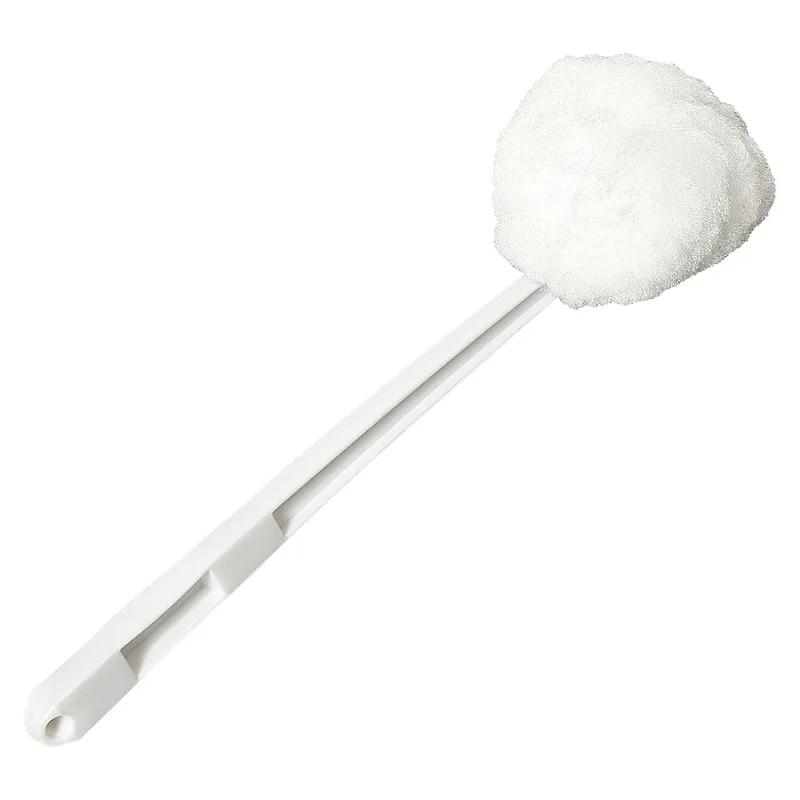
Use your bowl swab to force water over the trap within the drain of the toilet to lower the water level and expose the ring completely. Three or four plunges should do the trick. This ensures the cleaner makes direct contact with the mineral buildup rather than diluting in water.
Step 5: Apply Cleaner Under the Rim and Onto the Hard Water Ring
Apply the acid bowl cleaner to the bowl swab, then use it to apply evenly under the rim and around the visible mineral ring.
Use enough product to ensure full coverage but not so much that there is excessive runoff.
Step 6: Allow the Product to Dwell
Let it dwell for the recommended time on the product label without scrubbing. This step is crucial because the acid needs time to dissolve the mineral scale.
Avoid letting the product dry. If it starts to, lightly reapply.
Make sure the area is well-ventilated and never mix acid cleaners with bleach, ammonia-based products, or any other chemicals as this can create toxic fumes.
Step 7: Scrub with a Bowl Swab
Once the dwell time has passed, take a bowl swab and scrub the treated area in firm, circular motions.
Work methodically around the entire waterline, including under the rim where deposits often hide.
If the ring is still there after scrubbing with the bowl swab, use a wet pumice stone to gently buff the surface.

Keep both the stone and the porcelain wet at all times to avoid scratching.
Continue scrubbing until the mineral ring is gone and the surface feels smooth to the touch.
Step 9: Flush to Remove Chemical Residue
Flush the toilet a few times to restore the water level and rinse away all cleaner residue. You need to make sure ALL of the chemical is washed away to eliminate any potential chemical exposure for users.

Step 10: Inspect for Leftover Rings
Once rinsed, inspect the bowl carefully under good lighting.
Step 8: Address Heavy Buildup with a Wet Pumice Stone
If any traces of mineral staining remain, you can repeat this cleaning process as needed.
Step 11: Apply Restroom Disinfectant
When the bowl is free of mineral buildup, apply a neutral disinfectant restroom cleaner to the toilet’s exterior surfaces, including the handle, seat, tank, and base.
Step 12: Wipe Dry with a Microfiber Cloth
Once the dwell time on the disinfectant’s product label has passed, wipe the toilet down with a clean microfiber cloth to remove any splashes and leave the porcelain shining.
Step 13: Remove “Closed for Cleaning” Signage
Once everything is clean and dry, remove your “Closed for Cleaning” sign and return the restroom to service.
Quick Tips for Hard Water Ring Prevention & Removal
- Give acid cleaners proper dwell time for effective mineral breakdown.
- Always keep pumice stones and porcelain wet when addressing stubborn buildup.
- Never mix acid cleaners with any other chemicals as this can create hazardous fumes.
- Track areas with frequent staining to identify water distribution or flush performance issues.
- Replace damaged bowl swabs regularly to maintain effective agitation.
- Increase descaling frequency during peak occupancy or seasonal high-traffic periods.
- Maintain consistent ventilation to limit moisture and odor retention.
Preventing Hard Water Rings in Toilets
Proactive maintenance is the most effective way to ensure that toilets remain clean, stain-free, and pleasant for users.
Hard water rings are far easier to control through routine cleaning than they are to remove once the mineral scale has hardened into place. A structured program keeps toilets looking well-maintained and helps extend the lifespan of the fixtures.
Use the following preventive strategies to reduce the formation of mineral rings in commercial toilets:
- Daily cleaning with a neutral disinfectant: Regularly remove soils and bacteria that contribute to odors and buildup. A quick scrub inside the bowl prevents early deposits from clinging to porcelain.
- Weekly descaling treatments: Apply an acid-based bowl cleaner to dissolve developing scale. In facilities with very hard water, increasing this to multiple times per week may be necessary to stay ahead of mineral accumulation.
- Maintain proper water flow and flushing performance: Low water levels or delayed flushing allow minerals to settle at the waterline. Verify that flush valves, auto-flush systems, and bowl fill are functioning correctly.
- Address hidden buildup under the rim: Mineral deposits often form out of sight. Using the appropriate applicator allows acid cleaner to fully coat these areas and prevents streaking or ring reappearance.
- Monitor water hardness and adjust scheduling: Hardness levels vary by facility. Work with maintenance to evaluate water quality and tailor descaling frequency accordingly.
- Conduct regular inspections: Training staff to check the interior bowl surface during each cleaning helps catch early signs of discoloration before it becomes a persistent ring.
A prevention-focused approach not only improves restroom appearance but also minimizes the need for abrasive corrective action and reduces labor over time.
Final Thoughts
Hard water rings in toilets are more than just unsightly, they indicate ongoing mineral buildup that can cause staining, odors, and even fixture damage.
With the right cleaning chemicals, proper dwell time, and consistent maintenance, you can eliminate mineral rings efficiently and keep your restrooms looking clean and professional.
By following the Step-based process outlined in this article, custodial teams can standardize their cleaning routines and maintain spotless, sanitary restroom fixtures that leave a positive impression on every visitor.
Don’t let scale and buildup undermine your facility’s image.
Ready to make hard water rings in toilets a thing of the past? For expert recommendations on descalers and restroom maintenance supplies, reach out to your local Imperial Dade location. Our team can connect you with training tools, cleaning solutions, and best practices that help you protect your restroom.
Check Out These Additional Resources:
- Urinal Screens 101: The Simple Solution to Restroom Odor and Clogged Drains
- How to Clean Around Urinals: Eliminating Buildup, Bacteria, & Stains
- Best Practices for Restroom Trash and Feminine Hygiene Receptacle Cleaning
- 10 Most Common Restroom Complaints and How to Solve Them
- How to Keep Drain Odors from Coming Back: Preventative Maintenance Schedule
- Common Causes of Drain Odors: Key Considerations for Clean Restrooms
- How to Clean Under Bathroom Partitions: Tips to Maintain Bathroom Hygiene
- How to Clean a Toilet [VIDEO]
- How to Improve Facility Hygiene and Sustainability with the Right Solutions