
In commercial cleaning, wipers have a quiet but powerful role in how efficiently your facility runs and how clean it actually looks.
Choosing the wrong wiper can lead to torn paper, streaked glass, excessive use, overflowing trash bins, and wasted labor hours that can’t easily be tracked. What seems like a small consumable decision can easily become a silent but recurring operational cost.
Different kinds of wipers are designed for accomplishing different tasks. A wiper that works well for light dusting might fall apart if it’s used for disinfecting. Each type comes with tradeoffs. Traffic, soil type, chemical use, compliance standards, and workflow should also be considered to make the right choice.
In this article, we’ll walk you through the most common types of janitorial wipers, including:
- Standard Paper Towels
- Heavy-Duty / Industrial Wipers
- Nonwoven Disposable Wipers (Spunlace / Hydroentangled)
- Microfiber Cloths
- Cotton / Terry Cloth Rags
- Pre-Saturated Disposable Wipes
- Specialty Low-Lint Wipers
You’ll get practical insight into how each type performs in real-world cleaning environments so you can understand the strengths and limitations of each before making a decision.
How This Article Evaluates Janitorial Wipers
Not all wipers are designed for the same cleaning demands. Some prioritize cost, some prioritize durability, and others prioritize compliance. The key to making the right choice is asking the right questions and understanding how your answers fit in with the components of each wiper type.
To evaluate each type fairly, we’ll look at the following questions:
1. How Well Does the Wiper Handle the Task Type?
2. How Absorbent Is the Wiper, and What Does It Absorb Well?
3. How Strong Is the Wiper When Wet?
4. What Is the Cross-Contamination Risk?
5. What Is the True Cost Over Time?
6. How Does the Wiper Fit Into Your Workflow?
1. How Well Does the Wiper Handle the Task Type?
Not all tasks are equal.
Light-duty tasks like dusting and polishing need different performance than restroom disinfecting or spill response. Using a heavy-duty cloth for light dusting wastes money. Using thin paper for disinfecting wastes time and chemical.
The right choice should align with the given task’s soil level and liquid exposure.
2. How Absorbent Is the Wiper, and What Does It Absorb Well?
Absorbency isn’t just about the volume.
Water-based cleaners, disinfectants, grease, and bodily fluids all behave and react differently. Paper absorbs water well, but can struggle with oils. Some engineered nonwoven materials can absorb both efficiently.
If your team uses a whole pack of wipers to clean up one spill, it’s usually because of a material mismatch, not a training issue.
3. How Strong Is the Wiper When Wet?
Wet strength matters a lot more than many facilities realize.
If your team sprays disinfectant directly onto the wiper or uses bucket systems, weak paper can tear or fall apart mid-task. That increases the number of sheets you need to use and extends cleaning time.
Pro Tip: Remember that positively charged quaternary ammonium disinfectants can bind with negatively charged microfiber or cotton rags, reducing the chemical’s ability to eliminate germs.
Materials designed with saturation in mind tend to hold up better during dwell time and reduce supply usage.
4. What Is the Cross-Contamination Risk?
Reusable cloth systems require strict laundering and color-coding. Disposable options help reduce the spread of germs, but increase waste.
In healthcare, foodservice, and schools, material choice can directly affect infection control. The CDC emphasizes proper cleaning material handling to prevent the spread of pathogens. Your wiper choice plays a role here.
5. What Is the True Cost Over Time?
The cost per case is not the same as the cost per task.
The number of sheets you use, how long it takes you to use them, how much chemical you use with them, and waste disposal all affect the total cost of use.
A product that costs less on your invoice but requires double the sheets per spill is rarely a better deal in the long run.
6. How Does the Wiper Fit Into Your Workflow?
Roll, flat pack, bucket system, or pop-up box? How the wiper is designed to dispense also affects your cleaning efficiency.
If your wipers are stored loosely or in open bins, expect overuse and contamination. If they’re in controlled dispensing systems, usage becomes more predictable.
What are the Different Types of Janitorial Wipers?
Now let’s get into the different types of commercial wipers and where each one works best. We’ll do this by analyzing them across this set of components:
- Task Performance
- Absorbency
- Wet Strength
- Cross-Contamination Risk
- Cost Over Time
- Workflow Fit
Use your answers to the questions above to best match your facility’s needs.
Standard Paper Towels
Standard paper towels include multi-fold, C-fold, and general-purpose roll towels used for cleaning tasks.
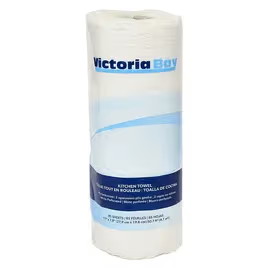
Use these for light-duty wiping in low-moisture environments.
Task Performance
Standard paper towels are best suited for light-duty tasks like wiping off countertops, drying up small water spills, and quick mirror touch-ups. They are a reasonable choice when the soil load is minimal and chemical use is light.
They are not designed for aggressive scrubbing or extended dwell times. When used outside of their intended environments, performance tends to drop quickly and sheet usage will likely increase significantly.
Absorbency
These towels are designed with a cellulose structure, making them a decent choice for absorbing water-based liquids. However, they are inefficient at absorbing oils and grease; they usually just smear it around instead of picking it up.
For spills with both water and oil present, staff may need multiple sheets to complete one task, increasing both product usage and labor time.
Wet Strength
Wet strength is limited at best in most standard paper towels. Once they are saturated with disinfectant or cleaner, the fibers start to break down, potentially leading to tearing or falling apart mid-task.
This can interrupt dwell time and require additional sheets to finish the job. That makes them an inefficient choice for disinfecting.
Cross-Contamination Risk
Because they’re a disposable product, standard paper towels reduce the risk of cross-contamination when used properly. Just keep in mind that higher sheet usage increases waste and trash volume. In fast-paced environments, this level of disposal can cause trash bins to overflow if they are undersized.
Cost Over Time
The cost per sheet or roll is low, which makes them an appealing choice at the point of purchase. But because they lack durability, their real-world usage per task is often very high. When multiple sheets are required for even medium-duty tasks, the total cost of use increases quietly but consistently over time.
Workflow Fit
These towels integrate easily into most facilities because they are typically compatible with most standard dispensers, or can even sometimes be used right out of the case.
They require no special training or storage systems. That simplicity can be a strength, but it can also encourage overuse when a standard roll’s performance limitations aren’t taken into account.
Heavy Duty / Industrial Paper Wipers
Heavy-duty and industrial paper wipers are reinforced paper products engineered for higher durability and absorbency than standard paper towels.
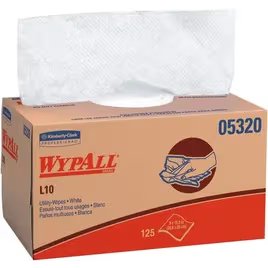
They work best in moderate-traffic environments like schools, offices, and retail.
Task Performance
Heavy-duty paper wipers are well suited for medium-duty cleaning tasks, such as restroom fixtures, counters, and general surface disinfecting. They offer improved scrubbing capability compared to standard towels.
While they are not intended for heavy grease removal, they handle most general cleaning tasks effectively. That makes them a practical upgrade in most commercial facilities.
Absorbency
These wipers absorb more liquid per sheet than standard paper, making them a better choice for saturation. They manage water-based cleaners very well and perform better than standard paper for light grease.
Their denser fiber structure helps with fluid retention, which is crucial for disinfectant dwell time.
Wet Strength
Because of their reinforced construction, these towels are able to maintain their structural integrity, even when they’re soaked. They are less likely to tear when wiping or wringing, reducing mid-task interruptions and offering more consistent cleaning performance.
Cross-Contamination Risk
As these are also single use products, they also minimize cross-contamination risk when they’re properly disposed of.
Because fewer sheets are typically required per spill, paper waste will likely be lower than lighter paper options. Facilities should still monitor disposal in high-traffic environments.
Cost Over Time
The cost per unit is higher than standard paper, but sheet usage per task is often lower. In many medium-traffic facilities, this leads to more predictable consumption and better cost control. Over time, the gains in labor efficiency often offsets the higher product price.
Workflow Fit
Industrial wipers are available in roll, center-pull, or flat pack formats, making them a great fit in most janitorial closet systems. Their improved durability reduces frustration while cleaning. For facilities that aren’t quite ready to implement a reusable cloth system, these are a strong middle ground.
Nonwoven Disposable Wipers (Spunlace / Hydroentangled)
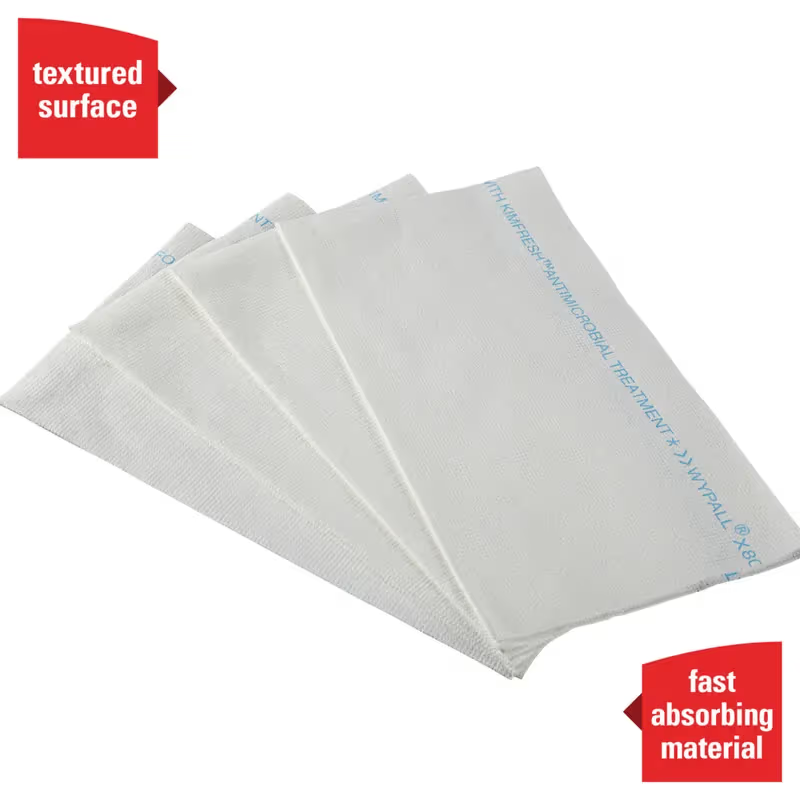
Nonwoven disposable wipers are engineered, cloth-like materials made from bonded cellulose and synthetic fibers.
They are a great fit in healthcare, foodservice, and compliance-focused environments.
Task Performance
These wipers are excellent for disinfecting, especially in situations where durability and consistency matter. They can withstand scrubbing, repeated wiping motions, and extended dwell times without degrading. This makes them particularly useful in healthcare and foodservice environments. Their clothlike feel also improves handling and surface contact.
Absorbency
Nonwoven disposable wipers absorb water-based liquids efficiently and often perform better than paper with light oil soils. Their blended fiber construction helps evenly distribute the fluid across the sheet. This helps with consistent chemical application for disinfection and increases efficacy.
Wet Strength
Wet strength is one of nonwoven’s biggest advantages. Even under heavy saturation, they do a great job of holding their structure and resisting tearing. This supports proper dwell time, which is essential for pathogen reduction per the CDC.
Cross-Contamination Risk
Because they are disposable, cross-contamination risk is minimal when used correctly. Facilities that cannot reliably manage laundering systems often prefer nonwoven disposables for this reason. Staff training is important here to prevent overuse.
Cost Over Time
The per-sheet cost tends to be higher than paper alternatives. However, their durability often reduces the number of sheets needed per task. Especially in compliance-focused facilities, the consistency and reduced rework nonwoven offers can justify the investment.
Workflow Fit
Often paired with controlled dispensing systems, these wipes integrate well into structured cleaning programs. They require slightly higher inventory planning and upfront cost, but offer extremely predictable performance once they are implemented.
Microfiber Cloths

Microfiber cloths use split synthetic fibers to increase total surface area and soil capture.
They are a great fit in facilities with strong standard operating procedures and quality control.
Task Performance
Microfiber performs exceptionally well for dusting, high-touchpoint cleaning, and polishing glass or stainless steel. Its fibrous structure captures the fine particles instead of just pushing them around on the surface. Studies supported by EPA research have shown microfiber can remove more bacteria from surfaces compared to traditional cloths when used as intended.
Absorbency
These cloths can hold a moderate amount of liquid with strong soil pickup. They also distribute cleaning solution evenly across the surface, which helps with cleaning efficacy.
Wet Strength
Microfiber is highly durable when it’s properly maintained. It tolerates repeated laundry cycles, though performance will gradually decline over time. Improper washing (especially with fabric softeners or high-heat drying) can significantly reduce their effectiveness.
Cross-Contamination Risk
When managed correctly, microfiber offers strong hygiene performance. However, without strict color-coding and laundering systems in place, it can become a hotspot for contamination. Facilities should put clear SOPs into place for color-coding different task areas.
Cost Over Time
Initial investment tends to be higher than disposable options, but cost per use drops drastically when laundering is controlled and the microfiber’s lifespan is maximized. Poor inventory management can quickly reduce those savings.
Workflow Fit
Microfiber requires structured tracking, storage, and laundering processes. Facilities lacking that discipline often struggle to see microfiber’s maximum benefits.
Cotton / Terry Cloth Rags
Cotton and terry cloth rags are traditional woven cotton cloths that are commonly used in maintenance settings.

These are best used in back-of-house or low-visibility maintenance areas.
Task Performance
They perform very well for bulk spill cleanup and general surface wiping, but struggle to pick up fine dust and bacteria. On high-touch or precision cleaning tasks, cotton typically underperforms compared to microfiber.
Absorbency
Cotton terry cloth is highly absorbent due to its looped fiber construction, which increases the rag’s surface area and liquid uptake. However, they tend to release absorbed liquid more slowly and remain damp longer, potentially increasing labor time, odor, and microbial concerns.
Wet Strength
High-quality cotton rags can withstand repeated laundry cycles, but the fibers will break down over time. Exposure to bleach, alkalines or high-heat can accelerate this deterioration. As the fibers degrade, linting and reduced absorbency typically become noticeable. Unlike engineered materials like microfiber, cotton consistency can vary from batch to batch.
Cross-Contamination Risk
Cotton presents more risk than engineered alternatives in high-risk hygiene settings because its fibers are smooth and do not lock in particles as well as microfiber does. Without structured laundering protocols, cotton cloths can spread soils from surface to surface.
Cost Over Time
The upfront purchase price is relatively low, especially with reclaimed textile rags. However, laundering costs (water, labor, detergent, energy, and replacement) must be factored in. Cotton struggles to stay economical when it’s not reused efficiently or laundered at scale. Poor inventory management and rag loss can also erode cost savings.
Workflow Fit
Cotton works best in facilities with general-purpose cleaning workflows. It lacks the specialization needed for high-precision or regulated cleaning environments. Without tight process control, facilities may struggle to maintain consistent hygiene standards using cotton alone.
Pre-Saturated Disposable Wipes
Pre-saturated disposable wipes are single-use cleaning cloths that are preloaded with a measured amount of cleaning or disinfecting solution.
They are most common in healthcare, education, foodservice, and high-traffic environments where chemical consistency and speed matter.
Task Performance
These wipes are designed specifically for disinfecting and sanitizing surfaces. Because the solution is evenly distributed throughout the wipe, they deliver consistent chemical coverage without the need for spray or secondary application. This can help with dwell time compliance when used as directed. They should not be used for soil removal and using the wrong formulation for the surface can lead to damage or compliance issues.
Absorbency
Pre-saturated wipes are designed to hold and release a set amount of solution rather than absorbing spills. The goal is surface coverage, not containment. They maintain moisture long enough to meet disinfectant contact time requirement times as long as they are used correctly.
Wet Strength
Wet strength is built into the product from the start, since they are fully saturated in their packaging. Quality wipes resist tearing while wiping and maintain their structural integrity throughout the full cleaning cycle. Inferior products may dry out quickly or shred during use. Make sure to keep the lid closed during storage to keep them from drying up.
Cross-Contamination Risk
Their single-use design significantly reduces cross-contamination risk. Because the chemical concentration is pre-measured, disinfection performance is consistent. However, cross-contamination can still occur if wipes are used across multiple surfaces before disposal. Make sure to discard each wipe after each individual use case.
Cost Over Time
The per-wipe cost is higher than dry disposables, but labor savings and chemical control often offset this premium. Facilities that use pre-moistened disposable wipes spend less time mixing, labeling, and managing secondary spray bottles. Overuse can occur if wipes are used for tasks that don’t match the intended use.
Workflow Fit
Pre-saturated wipes work best in regulation or compliance-based environments where dwell time and chemical dosage accuracy are important. Since chemical mixing is already taken care of, they can help simplify training and reduce variability in the cleaning process. Facilities with high turnover or where consistency matters more than cost often see improved cleaning and disinfection with this system.
Specialty Low-Lint Wipers
Specialty low-lint wipers are engineered for streak-free performance on smooth, high-visibility surfaces like glass, mirrors, stainless steel, and polished fixtures. They are typically made from tightly bonded fibers that minimize residue and fiber shedding.

You’ll most commonly find these in environments where residue, dust, or particulate cannot be left behind, like hospitality or corporate settings.
Task Performance
These wipers are great for glass cleaning, stainless steel polishing, electronics cleaning, and sensitive surface preparation. Their construction reduces fiber transfer that can interfere with coatings and finishes. They are not intended for heavy soils or abrasive scrubbing.
Absorbency
Absorbency is moderate and optimized for light cleaner application across smooth surfaces. They are not designed for holding large volumes of liquid or managing spill cleanup. Over-saturation can reduce their overall performance.
Wet Strength
High-quality low-lint wipers maintain their structural integrity when used with mild chemicals. They resist fraying, which is very important when the surface finish quality is a priority. They are not designed for aggressive scrubbing or repeated wringing. Their strength is finesse, not force.
Cross-Contamination Risk
Because they are typically used for very targeted tasks, cross-contamination risk is lower when protocols are followed. However, reusing the same wiper across multiple surfaces can transfer oils or residues. In areas where appearance matters, even minor cross-use can lead to visible streaking.
Cost Over Time
These wipers usually carry a higher per-sheet cost than other general purpose options. However, they help reduce rework, streaking, and customer complaints when used as directed. In areas where visual presentation drives customer perception, that tradeoff is often justified.
Workflow Fit
Specialty low-lint wipers work best as a supplemental product in a broader wiping system. They are not necessary for routine cleaning. Facilities that attempt to use them as universal wipers will likely experience unnecessary cost increases.
Final Thoughts
Janitorial wipers may seem like they’re interchangeable, but they’re not.
Each kind is designed for different task demands, soil conditions, and workflows. Choosing the wrong one can increase sheet usage, slow down cleaning, and raise hidden labor costs.
There is no universal “best” wiper. There is only the right wiper for a specific job in a specific facility.
Need help choosing the right wipers for your cleaning operation? Reach out to Imperial Dade! Our specialists can evaluate your facility’s wiper usage patterns and budget priorities to create a cleaning program that works in the real world.