
Most facilities think they know exactly how much they spend on toilet paper.
It’s right there on the invoice: a few cases of rolls ordered every month, or maybe a line item in the janitorial supply budget that doesn’t look that alarming.
But the real cost of toilet tissue rarely shows up on that invoice. It also shows up in custodial labor spent constantly refilling dispensers. Or in restroom complaints when rolls run out between checks. And in bags of cardboard cores that need to be disposed of.
When you zoom out, that seemingly small product choice can affect labor efficiency, waste management, and restroom uptime.
Traditional roll tissue has been a mainstay in commercial restrooms for decades. But as facilities face higher labor costs, heavier restroom traffic, and a growing shift toward sustainability, many are switching to coreless toilet tissue systems designed for higher capacity and lower waste.
At first glance, the difference seems pretty minor. One roll has a cardboard core and the other one doesn’t. In practice, however, that simple design change can affect refill frequency, labor requirements, waste volume, and total operating costs.
In most high-traffic restrooms, coreless toilet tissue provides considerable operational advantages. That being said, there are still certain situations where traditional rolls have their place. In this article, we’ll be breaking down the differences between coreless and traditional roll toilet tissue and how each system performs in real-world applications.
What is Coreless Toilet Tissue?
Coreless toilet tissue is exactly what it sounds like: toilet paper manufactured without the cardboard tube in the center. Instead of wrapping the paper around a cardboard core, the roll is wound tightly.
Removing the core changes a few important things:
- It allows for more usable paper per roll
- It requires less packaging per case
- It generates less waste per case
- It offers higher capacity per refill
Because of these advantages, coreless toilet tissue is commonly used in high-traffic facilities like airports, schools, big box stores, healthcare facilities, stadiums, and large office buildings.
Most coreless systems require specialized dispenser designed to hold larger rolls or multiple rolls at once.
What is Traditional Roll Toilet Tissue?
Traditional toilet tissue is the format most people recognize and use at home or in small offices.
The roll is wound around a cardboard core, which provides extra structure and allows the roll to spin freely in standard toilet paper dispensers.
These systems are popular because they’re:
- Simple to use and manage
- Widely compatible with existing dispensers
- Often cheaper upfront
However, that simplicity typically comes with a few operational trade-offs that become more noticeable the larger the facility or heavier the traffic.
Coreless vs. Traditional Toilet Paper: Key Differences
When comparing these two formats, the real question isn’t just which one costs less per case. The more important question is how each option impacts your total restroom operations.

Here are the factors that matter most:
- Cost Per Foot
- Cost Per Use
- Waste Reduction and Sustainability
- Labor and Refill Frequency
- Restroom Uptime and User Experience
- Dispenser Compatibility and Upfront Costs
1. Cost Per Foot
If you want a more accurate way to compare toilet tissue formats, start with cost per foot, not cost per case.
Cost per foot measures how much you’re paying for the actual usable paper, regardless of roll size, packaging, or format.
While two cases of toilet tissue might look similar on paper, one can contain significantly more total footage than the other. Traditional rolls with cardboard cores typically have less usable paper per roll. On the other hand, coreless systems maximize how much paper is packed into each roll.
That means a lower case price doesn’t automatically equal better value.
But you can’t stop here. Cost per foot tells you how efficiently you’re purchasing paper, but it doesn’t account for how the product actually performs once it’s in the restroom.
Consider:
- A lower cost per foot product in a low-capacity traditional dispenser may still lead to higher labor costs because it needs to be refilled more frequently.
- A slightly higher cost per foot product in a high-capacity system can reduce overall paper usage and refill frequency.
Cost per foot is a great starting point, but it doesn’t offer the whole picture. To make the right decision, evaluate cost per foot alongside the other comparables below.
2. Cost Per Use
Once you understand cost per foot, the next step is considering cost per use, which is where coreless systems often pull ahead.
While traditional rolls often seem like the more cost-effective option at first glance, that number doesn’t tell the full story.
Coreless toilet tissue often provides greater value because:
- Each roll typically contains more usable paper
- Dispensers hold larger or multiple rolls
- Custodial teams refill them less frequently
When you combine product usage with labor time, the true cost per use often favors coreless systems.
In high-traffic facilities where restrooms require constant attention, even small reductions in refill frequency can lead to significant labor savings over time.
3. Waste Reduction and Sustainability
Waste management is another area where the difference is pretty obvious.
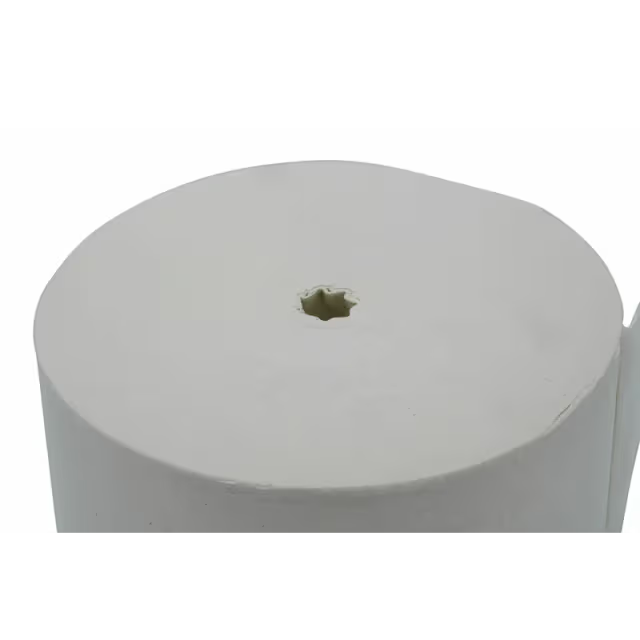
Every traditional roll of toilet paper leaves behind a cardboard core. On its own, that doesn’t seem like much; but across a large facility, the numbers add up quickly.
A single building with dozens of restrooms can easily go through thousands of rolls of toilet paper each year. That means thousands of cardboard cores entering the waste stream.
Coreless toilet tissue eliminates that waste entirely. This provides a few practical benefits:
- Less material going to landfills
- Fewer waste bags filled with restroom debris
- Reduced packaging in shipping and storage
For organizations tracking sustainability improvement or waste reduction goals, switching to coreless tissue can be a relatively simple way to reduce environmental impact without changing restroom operations too much.
4. Labor and Refill Frequency
Custodial labor is one of the highest ongoing costs in facility management. Almost anything that reduces restroom maintenance time can make a noticeable difference.
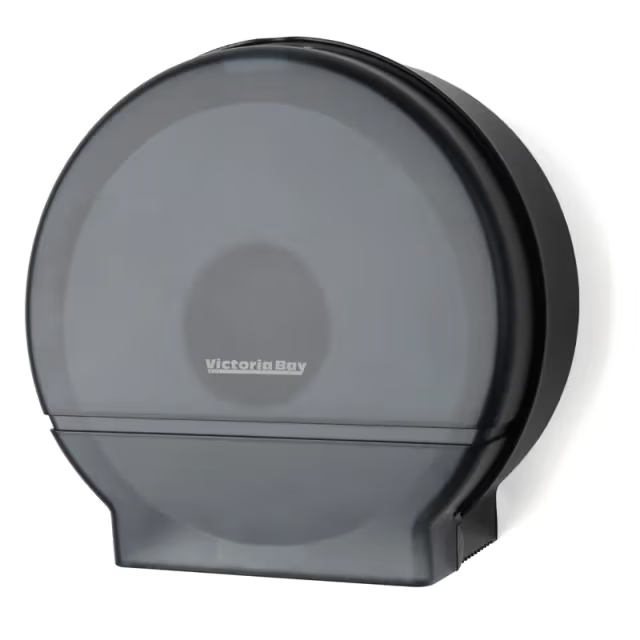
Coreless toilet tissue systems typically use high-capacity dispensers designed for busy environments. Many hold multiple rolls or very large rolls of tissue.
The result is simple: fewer refills.
Instead of replacing empty rolls multiple times per shift, custodial staff can spend less time restocking and more time focusing on cleaning tasks that impact hygiene and appearance.
In high-traffic environments like stadiums, convention centers, and schools, reducing refill frequency can significantly improve restroom uptime and operational efficiency.
Traditional rolls, on the other hand, require more frequent replacements, especially when basic single-roll dispensers are used.
5. Restroom Uptime and User Experience
Few things frustrate restroom users more than empty dispensers.
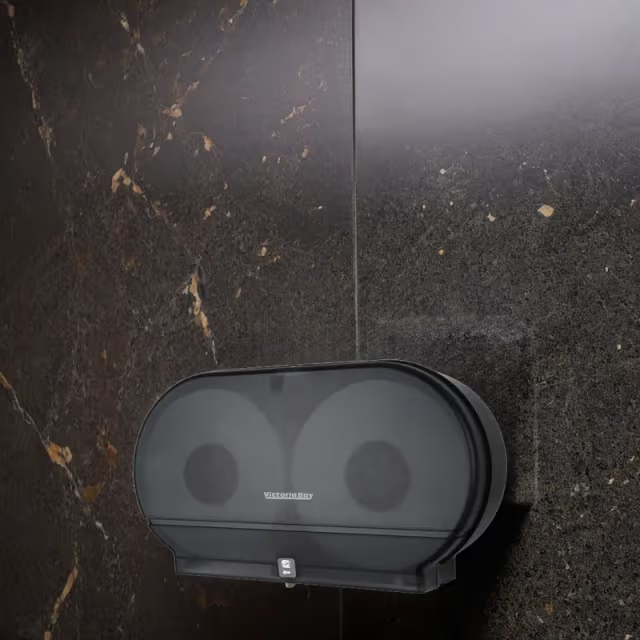
Coreless systems help prevent that problem by increasing dispenser capacity and thereby reducing the chances that a restroom runs out of paper between cleaning checks.
Many coreless dispensers also feature controlled dispensing designs, which can help limit excessive pulling or waste.
Traditional roll systems vary widely depending on the dispenser design. Some facilities still use basic spindle dispensers that can only hold one roll at a time.
In busy environments, a traditional setup can lead to more frequent outages unless staff are constantly checking restrooms.
For facilities that prioritize user experience and restroom reliability, high-capacity systems are often the better choice.
6. Dispenser Compatibility and Upfront Costs
If coreless toilet tissue offers so many advantages, why isn’t every facility using it?
The biggest barrier is dispenser compatibility.
Coreless systems require dispensers designed specifically for that format. If a facility already has hundreds of traditional dispensers installed, replacing them represents a capital expense.
For large organizations, that cost can be significant. This is why many facilities adopt coreless systems gradually, upgrading dispensers during restroom renovations or replacement cycles rather than switching the entire facility over at once.
That said, the long-term operational savings from reduced labor and waste often offset the initial investment.
When Traditional Toilet Tissue Still Makes Sense
Despite the advantages of coreless systems, traditional toilet tissue isn’t obsolete by any means. There are still some situations where it makes sense:
- Low-Traffic Restrooms: Small offices or private restrooms with limited use may not benefit as much from high-capacity dispensers. In these spaces, traditional rolls can work perfectly fine.
- Existing Dispenser Infrastructure: If a facility has recently installed new traditional dispensers, replacing them immediately may not be financially practical. Waiting until equipment reaches the end of its lifecycle can be a more reasonable strategy.
- Budget Constraints: Budgets don’t always align with improvements. If upgrading your dispensers isn’t feasible right now, continuing with traditional rolls may be the better short-term solution. Just be aware that avoiding these upgrades long-term can lead to higher labor and supply costs over time.
How to Choose the Right System for Your Facility
Selecting the right toilet tissue system requires more than comparing product specs. It requires you to understand how your facility actually operates. Here are a few practical factors you can evaluate:
- Restroom Traffic Levels: High-traffic facilities like stadiums, universities, and airports benefit the most from a higher-capacity system. In these environments, refill frequency and labor efficiency matter much more.
- Custodial Staffing: Facilities with limited cleaning staff often benefit from a system that reduces the number of maintenance tasks. High-capacity dispensers allow teams to check restrooms less frequently without risking a dispenser runout.
- Waste Reduction Goals: Organizations with sustainability initiatives should consider the benefits of eliminating cardboard cores. While the impact is small per roll, it becomes meaningful at scale.
- Long-Term Costs: Facilities that focus only on the case price may overlook operational costs. Considering the total cost of use can often change your purchasing decision.
Final Thoughts
When comparing coreless vs. traditional toilet tissue, the right answer depends largely on your facility’s size, traffic levels, and operational priorities.
For high-traffic commercial environments, coreless toilet tissue often provides clear advantages:
- Reduced waste
- Higher dispenser capacity
- Lower refill frequency
- Improved labor efficiency
Traditional rolls can still work in smaller or low-traffic environments, especially when replacing dispensers isn’t practical.
But for many large facilities, continuing to use traditional rolls simply because they’re familiar may be costing them more than they expect.
The smartest approach is to evaluate restroom operations holistically. Look at product usage, labor time, waste management, and user experience.
When you do that, the choice between coreless and traditional toilet tissue becomes much clearer.
Need help choosing the right toilet tissue for your facility? Reach out to Imperial Dade! Our team of experts can evaluate the staffing and traffic patterns of your facility and recommend the best option for your specific circumstances.
Check Out These Related Articles:
- #1 Way to Avoid Paper Towel and Toilet Tissue Stock Outs in Your High Traffic Restroom
- How to Choose the Best Restroom Paper Towel Dispenser for Your Business
- How to Improve Your Commercial Restroom’s Image: 3 Must-Have Products
- 10 Most Common Restroom Complaints and How to Solve Them
- Best Practices for Restroom Trash and Feminine Hygiene Receptacle Cleaning
- How to Clean Bathroom Tile and Grout: 10 Tips and Tricks You Need
- Commercial Odor Control Systems: How to Eliminate Bathroom Odors