
Choosing the right toilet paper for your commercial restroom can be very consequential. The one you select influences many aspects of your restroom’s performance, including: operational efficiency, supply costs, maintenance needs, plumbing reliability, and the experience your users walk away with.
Many facilities make their decision solely on the price per case, which is a short-sighted approach that almost always costs more in the long run.
The best toilet paper for a hospital likely won’t be the same as for a restaurant, school, or corporate office. Traffic levels, plumbing systems, sustainability, and user expectations can all play a role in what “best” really means.
In this article, we’ll walk you through how to choose the right toilet paper for your restroom, based on real-world performance, traffic levels, labor impact, plumbing compatibility, and user expectations, so you can make the most educated decision possible for your specific facility.
Making a smart toilet paper decision starts with asking the right operational questions. Each of the criteria below can affect cost, maintenance, and user satisfaction in your facility.
1. How Much Traffic Does This Restroom Actually Get?
Your traffic volume should determine the roll capacity your restroom needs.
Low-traffic restrooms can handle standard rolls, while high traffic spaces need high-capacity formats to prevent runouts and excessive refill requirements.

2. How Often Can Our Staff Refill Dispensers?
If your staff can’t check restrooms frequently enough, small rolls will likely create big problems.
High-capacity systems help reduce service trips, prevent stockouts, can make maintenance more predictable, and often hold multiple rolls.
3. What is the Real Cost Per Use?
Cheap paper often leads to overuse. Users tend to take more sheets when the paper is weak or thin, which increases consumption, refill frequency, and long-term costs.
Focus on performance, not just the price per roll.
4. What Do Our Users Expect?
In customer-facing restrooms and facilities where comfort matters, low-quality paper can hurt perception.
In back-of-house or employee restrooms, durability and cost control will likely matter more than softness.
The key is to match quality to the setting.
5. How Compatible Is It With Plumbing?
Older or sensitive plumbing systems can be less forgiving.
Fast-dissolving tissue can help reduce disruptive clogs and costly service calls, especially in buildings with a history of drainage issues.
6. How Will Our Choice Affect Our Maintenance Workload?
When they’re used outside of their optimal environments, smaller rolls or weak paper often increase refill frequency and complaints.
Especially in busy environments, high-capacity or durable options can help reduce service interruptions and free up time for staff to accomplish other tasks.
7. Does It Support Sustainability Goals?
Post-consumer recycled content, reduced packaging, and coreless designs can help lower environmental impact. There are many certified and compliant offerings. Just make sure performance stays strong so your sustainability gains aren’t canceled out by operational problems.
With these in mind, let’s go over the steps to choose the right toilet paper for you.
Step-by-Step: How to Choose the Right Toilet Tissue
Choosing toilet paper for a commercial restroom is all about matching product performance with how your facility actually operates. The steps below will help walk you through a practical decision-making process that balances traffic levels, labor requirements, user expectations, and more so you can choose a solution that works in the real world, not just in theory.
Follow these steps to make an educated decision for your business:
1. Match the Paper to Your Traffic
2. Calculate the True Cost of Use
3. Evaluate Your Plumbing
4. Consider Your Users’ Expectations
5. Align With Your Sustainability Goals
1. Match the Paper to Your Traffic
Ask yourself: How many users do our restrooms serve per day? Do we have the staffing available to meet restocking needs?

High-traffic restrooms need high-capacity formats like jumbo or coreless as well as controlled consumption to reduce labor and prevent stockouts.
Low-traffic restrooms can support more premium, comfort-focused products like standard rolls because refill demands are lower and staff can check more regularly.
Making a choice that doesn’t match your traffic volume is one of the biggest mistakes facilities make in their decision process. Underestimating traffic typically leads to frequent stockouts and complaints, while overestimating often leads to overspending.
2. Calculate the True Cost of Use
Ask yourself: Are users overusing our current paper? Do we have too frequent reorders?
Purchasing decisions based solely on cost per roll are often the wrong choice. It’s far more important to evaluate cost per use or cost per day.
Here’s why:
- A cheap roll that’s ultra-thin will likely lead to users grabbing more sheets to get the job done.
- More sheets per user means the roll empties faster and needs to be refilled more often.
- Frequent refill checks generally mean higher labor costs.
Cheap paper, regardless of format, ply, or fiber, can lead to overuse, complaints, and plumbing issues.
Instead, focus on strength, sheet count, and real-world use patterns. These provide a much clearer picture of the true cost over time.
Focus on cost per use, not just cost per roll.
3. Evaluate Your Plumbing
Ask yourself: Have we had recurring clogs or service calls? Is our building older? Do we have sensitive plumbing?
Many buildings have no problem tolerating any kind of toilet tissue without any issues. Some, especially older ones, do not.
Most plumbing issues are caused by people using paper towel or excessive amounts of toilet paper as a seat cover.
Before choosing a product:
- Review your plumbing age and condition. Long drains and older pipe systems are less forgiving.
- Offer seat covers to help limit additional paper use.
- Consider your history of clogs and service calls.
- Have your plumbing system evaluated to look for any faults or sensitivities.
Investing in a paper designed for fast breakdown can make a noticeable difference. A small upcharge for fast-dissolving tissue is often worth it compared to the cost of ongoing service calls.
Even cheap paper can become expensive quickly if it creates too many operational issues.
If you are experiencing frequent issues, it may be worth looking into the plumbing itself rather than just the toilet paper you are using.

4. Consider Your Users’ Expectations
Ask yourself: Is our restroom customer-facing or for employees only? Would rough or thin paper reflect poorly on our business?
User expectations matter because your restroom’s perception can affect your entire brand’s perception, for better or worse.
Guests in a fine-dining restaurant or medical office will expect a different experience than workers in a warehouse.
Employee-only restrooms can typically get by with basic, functional paper since perception here isn’t part of the customer’s brand experience.
Customer restrooms, especially in hospitality, healthcare, or corporate spaces need a more comfortable, higher-quality experience.
5. Align With Your Sustainability Goals
Ask yourself: Are we tracking sustainability metrics or pursuing certifications? Can we increase recycled content use without sacrificing performance?
Toilet tissue can play a significant role in reducing waste and supporting environmental initiatives.
Many facilities have mandates or goals related to:
- Recycled content
- Reduced waste
- Lower environmental impact
- Third-party certifications
Choosing toilet tissue that aligns with these goals should not be an afterthought. But it must be balanced with performance. Recycled content is great, but only if the paper still does its job.
Third-party certifications from organizations like Green Seal or UL Environment can help validate any sustainability claims.
How Following These Steps Translates Into Real Choices
Now that we know what considerations to keep in mind and what questions to ask, let’s look at how they play out by comparing the different formats and constructions commonly found in commercial restrooms:
Format Choices
Standard Roll Toilet Tissue
Standard rolls often deliver a familiar, residential feel, which can be a bonus in executive or hospitality restrooms where comfort and experience matter. However, they tend to run out more quickly which increases refill labor.
They’re best in low-traffic restrooms where:
- Staff can check and refill as frequently as needed
- User perception matters most
- Occupants expect softness and comfort
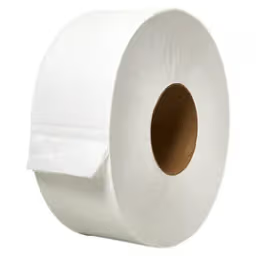
Jumbo Roll Toilet Tissue (JRT)
Jumbo rolls are designed for busy restrooms with high-traffic. Their large rolls dramatically reduce the number of refills you need to meet demand, which makes them great for large or understaffed facilities. However, using ultra-thin economy grades can lead to complaints and overuse, cancelling out some of your expected savings.
They’re best in high-traffic restrooms that need:
- Reduced stocking and refilling labor
- Lower risk of stockouts
- Supply cost efficiency over time.

Coreless High-Capacity Tissue
Coreless tissue goes a step beyond JRT by offering high capacity and sustainability. Without a cardboard core, more paper fits in the same dispenser footprint with less waste. Keep in mind that your dispensers must be coreless compatible to use this format.
They’re best in medium-to-high traffic restrooms where both sustainability and efficiency matter.
They also:
- Maximize usable paper per case
- Reduce waste with less packaging and no cardboard cores
- Typically dissolve easily
Mini Jumbo Roll Toilet Tissue (Mini JRT)
Mini jumbo rolls are designed for restrooms that see steady use but don’t quite need full jumbo capacity. They hold more paper than standard rolls, which helps cut down on refill frequency, while still fitting in more compact spaces. However, in very high-traffic restrooms, they can still run out faster than full jumbo systems, leading to more frequent checks during peak times.
They’re best in mid-traffic restrooms that need:
- Reduced refilling compared to standard rolls
- A balance between capacity and dispenser space
- Better labor efficiency without oversized systems
Construction Choices
1-Ply Toilet Tissue
1-ply paper is often misunderstood. Although it’s often chosen for its low cost and fast breakdown, users tend to use more sheets to compensate for its lower strength.

2-Ply Toilet Tissue
2-ply, on the other hand, typically feels softer and more substantial, which can reduce consumption, but only if the sheet strength and quality are good.
Pro Tip: Choose your ply based on how the paper actually performs in your restroom environment.
Material Choices
Virgin Fiber Toilet Tissue
Virgin paper is generally softer and brighter, providing a more premium restroom experience, but costs more—both at the point of purchase and over use. It’s also much less sustainable as it is not made up of any recycled content.
Recycled Fiber Toilet Tissue
Recycled fiber paper supports environmental goals and uses fewer new resources to manufacture. A well-designed recycled roll often hits the sweet spot between sustainability and roll quality as long as softness and strength are acceptable.
Common Toilet Paper Mistakes Facilities Make
When choosing toilet tissue for your facility, avoid these common pitfalls:
- Choosing only on price per case. This ignores real-world usage patterns and can even increase total cost.
- Ignoring your plumbing realities. If clogs are happening regularly, your toilet paper choice matters more than you think.
- Overlooking refill labor. Frequent refilling adds up to real hours on the clock quickly.
- Sacrificing performance for sustainability. Sustainability should complement, not compromise usability.
Investing a bit more thought ahead of time can help save labor, headaches, and perception issues down the road.
Final Thoughts
There isn’t a single “best” toilet paper for every restroom. The right choice strikes a balance between capacity, comfort, cost, and the traffic levels of your facility, while keeping plumbing safety and your sustainability goals in mind.
Match the steps we’ve gone over with the tissue format, construction, and material that best meets your operational needs and budget, with actual costs over time accounted for.
If you’re still unsure, consider a short pilot test of a few different options before rolling them out facility-wide. This is a low-risk strategy that can yield clear and valuable data.
Need help choosing the right toilet tissue for your operation? Reach out to Imperial Dade! Our specialists can evaluate your facility’s restroom usage patterns and budget priorities to create a restroom supply program that works in the real world.
Check Out These Related Articles:
- #1 Way to Avoid Paper Towel and Toilet Tissue Stock Outs in Your High Traffic Restroom
- How to Choose the Best Restroom Paper Towel Dispenser for Your Business
- How to Improve Your Commercial Restroom’s Image: 3 Must-Have Products
- 10 Most Common Restroom Complaints and How to Solve Them
- Best Practices for Restroom Trash and Feminine Hygiene Receptacle Cleaning
- How to Clean Bathroom Tile and Grout: 10 Tips and Tricks You Need
- Commercial Odor Control Systems: How to Eliminate Bathroom Odors