
In commercial restrooms, toilet paper usually only gets attention when something goes wrong. The wrong choice can show up fast in the form of clogged toilets, constant refilling, or guest complaints about “cheap” paper.
The toilet paper you use in your restroom can directly influence labor requirements, user perception, and supply costs; yet, many facilities still buy solely on the price per case alone.
That can be a huge mistake.
The best toilet paper for a hospital likely won’t be the same as for a restaurant, school, or corporate office. Traffic levels, plumbing systems, sustainability, and user expectations can all play a role in what “best” really means.
In this article, we’ll break down the most common commercial toilet paper formats, constructions, and materials, including:
- Formats
- Standard Roll Toilet Tissue
- Jumbo Roll Toilet Tissue (JRT)
- Coreless High-Capacity Tissue
- Mini Jumbo Roll Toilet Tissue (Mini JRT)
- Constructions
- 1-Ply Toilet Tissue
- 2-Ply Toilet Tissue
- Materials
- Virgin Fiber Tissue
- Recycled Fiber Tissue
We’ll evaluate them over some key considerations so you can make a confident, educated decision for your facility.
Not all toilet paper performs the same in every commercial setting. A product that works well in a small office may fail in a stadium, and a budget-friendly option in a warehouse could damage perception in a medical office.
To make a smart decision, you need to think beyond the cost per roll and ask yourself some key questions:
How Well Does This Paper Handle The Restroom’s Traffic Volume?
Traffic volume determines whether a paper format can keep up with the restroom’s expected demand without the need for constant restocking.
High-traffic restrooms need high-capacity options that reduce the risk of runouts, while low-traffic restrooms can support smaller formats that prioritize comfort or appearance.
Matching your paper type to your usage levels is one of the most important steps toward preventing both overstocking and stockouts.
How Often Will Staff Need to Refill?
Refill frequency affects both the labor costs and overall reliability of your restroom. High-capacity options can help meet consumption rates while reducing the number of service trips needed.
In facilities with limited staffing or large restroom footprints, choosing a paper that extends the time between refills can significantly improve your maintenance efficiency.
What is the True Cost Over Time?
The initial price only tells part of the story. Case yield, paper strength, sheet size, and user behavior can influence how quickly paper is used, which affects reorder frequency and total spend.
With that in mind, consider the paper’s performance under real-world conditions, not just the price per roll or case.
What Kind of Experience Does It Create for Users?
Toilet paper plays a subtle but very real role in how people judge restroom cleanliness and the quality of the overall facility.
Softer, stronger papers typically create a more positive impression, while rough or thin products can lead to complaints.
The right balance depends on the user. Is the restroom customer-facing, or employee-only?
How Compatible Is It With Plumbing?
While most buildings won’t have much trouble with most kinds of toilet paper, breakdown performance does matter, especially in older buildings or facilities with long drain lines.
Paper that dissolves quickly can help reduce the risk of clogs and costly service calls. That being said, if you are experiencing recurring or severe plumbing-related issues, it may make more sense to look at the plumbing itself than the paper you are using.
How Will It Affect Maintenance Workload?
Your paper choice can influence how often staff needs to respond to empty dispensers, complaints, or plumbing issues.
Higher-capacity, well-designed products can help reduce service interruptions, while low-capacity or weak paper can increase day-to-day maintenance demands.
How Does It Support Sustainability?
Many facilities track environmental performance metrics. Recycled fiber content, reduced packaging, and efficient product design can all contribute to sustainability initiatives. Just remember that your choice should not completely sacrifice operational needs to support sustainability.
With these in mind, let’s go over the most common toilet paper formats and where they fit best.
Formats of Toilet Tissue
The format of toilet tissue you choose can have a profound effect on the amount of paper you run through and pay for, as well as the number of times it will need to be refilled.
While smaller or lower-traffic facilities can usually get away with using smaller rolls, larger, higher-traffic facilities will likely need a jumbo option to meet demand and not require constant refilling effort from your team.
That being said, a higher-capacity roll with thin or cheap paper will encourage users to use more paper at a time to get the job done, offsetting some of your potential savings.
The key here is to balance paper strength and user comfort with the demand of your restroom.
Standard Roll Toilet Tissue
Standard roll toilet tissue is a smaller, more familiar roll that most people use at home, which is why so many facilities default to it, even if it isn’t always the best fit operationally. That familiarity can be a plus, especially in facilities where comfort and perception matter, but expect rolls to empty more quickly.

When they’re used in the right settings, generally in low-traffic restrooms where user comfort and perception outweigh the need for capacity, standard rolls can work well. In the wrong one, they can quietly and quickly drive up labor and complaints.
Traffic Volume
Standard rolls are best suited for low-traffic restrooms such as small offices, administrative areas, or private employee restrooms.
In higher-traffic restrooms, these rolls deplete more quickly than other options, which means more frequent service checks and a higher likelihood of stockouts.
Refill Frequency
Because each roll contains less paper than other formats, your staff will need to restock much more often. In facilities without dedicated daytime staff, this can lead to more frequent runouts that negatively affect user perception.
Cost (Initial + Ongoing)
While standard rolls are low-cost upfront, they tend to cost more as they are used because of overconsumption, especially when the paper isn’t very strong. Users tend to take more when the sheets tear too easily. If the rolls are not secure, they can easily be stolen.
User Experience
Standard rolls tend to be softer and thicker than other options and deliver the most “residential” feel. For executive restrooms, hospitality spaces, or anywhere else where comfort or perception matters, high-quality standard rolls can elevate the feeling of cleanliness and care.
Plumbing Compatibility
Most commercial-grade standard rolls are designed to dissolve quickly, lowering the potential for service disruptions. However, overuse can challenge older or sensitive plumbing systems, especially with thicker, 2-ply paper.
Maintenance Impact
These rolls demand more frequent restocking and higher monitoring than other types. With that in mind, these rolls make the most sense where traffic is predictable and manageable.
Sustainability
Smaller rolls mean more cardboard cores and packaging to dispose of. However, recycled-content options are widely available.
Jumbo Roll Toilet Tissue (JRT)
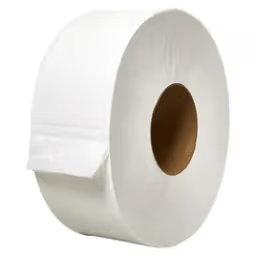
With jumbo roll tissue, also known as JRT, capacity comes first. These rolls are specifically designed to keep restrooms stocked, even when traffic is heavy or unpredictable. By dramatically increasing how much paper is available per restock, JRT reduces refill frequency and helps prevent stockouts.
When you’re able to match quality with the amount of traffic you expect, jumbo rolls are one of the most efficient options available. This is especially true in high-traffic restrooms where labor efficiency and product availability are your top priorities. That said, ultra-thin paper can sometimes lead to overuse and frustration.
Traffic Volume
JRT is designed for high-traffic restrooms, like those in universities, airports, stadiums, and malls. These environments benefit the most from the extended service intervals these rolls are able to provide.
Refill Frequency
The larger roll size significantly reduces how often your staff will need to restock. This is especially valuable in facilities with restrooms that are far apart or where staffing is limited.
Cost (Initial + Ongoing)
Jumbo rolls cost more per roll at the point of purchase, but offer a lower cost per foot than standard rolls. That generally makes them more economical to use over time.
However, keep in mind that extremely thin economy grades can lead to users to use more paper at a time, which can cancel out some of your expected savings.
User Experience
The user experience varies widely with JRT.
While premium jumbo roll tissue can perform very well, the more common ultra-thin options can generate complaints and lead to overuse. Paper strength and softness should be evaluated together to make the best choice.
Plumbing Compatibility
Most JRT is designed to dissolve rapidly, which helps reduce the risk of any service interruptions. That being said, if users use too much paper at once, the wrong jumbo product can increase the risk for clogs in older or sensitive plumbing systems.
Maintenance Impact
Reduced refill frequency and fast dissolving means lower labor costs and fewer emergency service calls.
Sustainability
Fewer roll changes lead to less packaging waste. While many still have cardboard cores, many jumbo rolls are available with high-recycled fiber content, 3rd party certifications, or processed chlorine free.
Coreless High-Capacity Tissue
Coreless toilet tissue takes the high-capacity idea a step further by eliminating the cardboard core and maximizing the usable amount of paper on every roll. That means fewer changeouts, less waste, and more value per roll—all without always needing the oversized footprint of a traditional jumbo dispenser. Most coreless dispensers offer multiple roll capacity.

For facilities trying to balance efficiency, space constraints, and sustainability goals, coreless tissue often hits a sweet spot. It can deliver capacity where it’s needed while quietly reducing waste behind the scenes.
Traffic Volume
Coreless paper products perform well in medium-to-high traffic restrooms where facilities want the extended roll life of JRT, without the need for oversized jumbo dispensers.
Refill Frequency
With no core and minimal leftover stub, nearly the entire roll is usable. This helps extend the time between changeouts and improves product use and efficiency.
Cost (Initial + Ongoing)
Coreless systems will likely reduce product waste, improving cost efficiency over time even with a slightly higher cost per case. You’re paying for nearly all usable paper instead of any cardboard cores or extra packaging.
User Experience
Because coreless paper is available in a wide range of quality levels (from economy to premium and a lot in between), selecting the right balance of softness and strength is crucial to stay efficient and avoid overuse.
Plumbing Compatibility
Many coreless products are made to dissolve quickly, which generally makes them a good choice for facilities with old or sensitive plumbing who may be concerned about clogs or service disruptions.
Maintenance Impact
Fewer changeouts and no cores to dispose of helps streamline janitorial maintenance, lower labor requirements, and limit service calls, compared to other formats.
Sustainability
Coreless rolls eliminate cardboard core waste and improve packaging efficiency with nearly all of the space in a case being filled with usable paper. That makes coreless an excellent choice for facilities with sustainability initiatives.
Mini Jumbo Roll Toilet Tissue (Mini JRT)
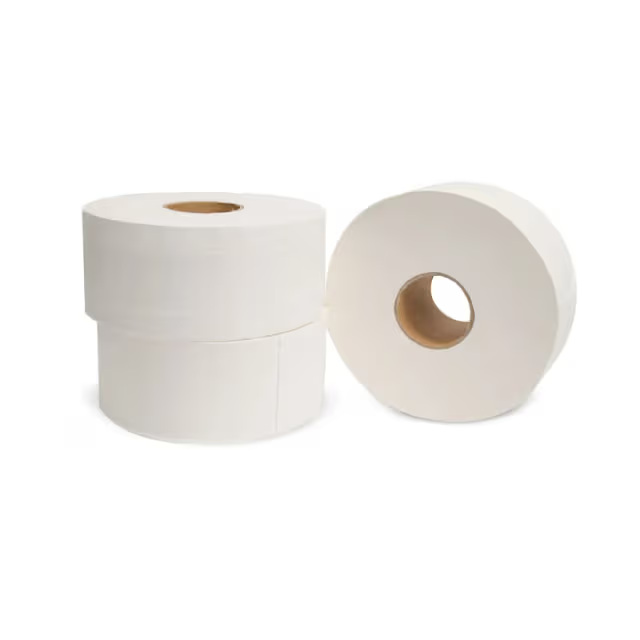
Mini jumbo tissue, or mini JRT, is designed to bridge the gap between standard rolls and full jumbo systems. It offers greater capacity than single rolls and is able to fit into more compact spaces, making it a practical choice for restrooms that see steady but not overwhelming traffic.
This format can help reduce refill frequency without requiring the large dispenser footprint of a full jumbo setup. For many medium-traffic facilities, mini jumbo strikes a balance between labor efficiency and space limitations. Keep in mind that it may still require more frequent service in peak-use environments.
Traffic Volume
Mini JRT is designed for medium-traffic restrooms, like those in retail, K-12 schools, or offices. These environments need more capacity than standard rolls but less than full jumbo.
Refill Frequency
Refill frequency is moderate with mini JRT systems. It requires fewer refills than standard rolls, but more than full JRT systems.
Cost (Initial + Ongoing)
Mini JRT offers a very balanced cost profile. It’s often a practical middle ground between smaller and larger options.
User Experience
Like with JRT, the user experience varies widely.
Premium roll tissue typically performs very well, but ultra-thin options can lead to complaints and overuse. Paper strength and softness should both be considered to help you make the best choice.
Plumbing Compatibility
Plumbing compatibility is generally comparable to most other commercial grade tissue when it’s designed for fast breakdown.
Maintenance Impact
Mini JRT reduces the amount of refill labor needed compared to standard rolls, without needing a maximum-capacity system.
Sustainability
In general, mini jumbo systems produce less waste than standard rolls. Keep in mind that they do typically include cardboard cores.
Paper Construction
While roll size and format affect how often you refill, roll construction affects how the paper works once it’s in someone’s hands. That’s where ply comes in, and it’s one of the most misunderstood parts of toilet paper selection.
At first glance, ply choice seems pretty simple: 2-ply is softer, and 1-ply is cheaper. While this can be true in theory, it’s usually more complicated in practice. Ply can influence how much paper users take, how soon your rolls will run out, and how well the paper breaks down when it’s flushed.
The best choice is usually not about ply alone; it’s about how strength, comfort, and breakdown work together when the paper is used.
1-Ply Toilet Tissue
1-ply toilet paper is designed with simplicity and cost-control in mind. With a single layer per sheet, it is often used in high-traffic facilities where managing supply expenses and reducing clog risk are the greatest priorities.
When the product is well designed, 1-ply tissue can perform well, even in demanding environments. However, thinner, cheaper sheets may lead users to take more paper per visit, which can increase consumption and refill frequency if the balance between strength and cost is not carefully considered.
Traffic Volume
1-ply is common in high-traffic restrooms because it reduces cost per roll and generally lowers clog risk. That means fewer service interruptions, as long as the paper isn’t overused.
Refill Frequency
In a vacuum, 1-ply rolls will need to be refilled more often because users will use more of it to achieve the same result as 2-ply paper.
Cost (Initial + Ongoing)
Although 1-ply typically has a lower upfront cost, users will likely use more of it at a time, which can increase costs over time.
All things considered, a stronger, better-designed sheet (regardless of ply) should perform best cost-wise under real-world conditions.
User Experience
In general, facilities that use 1-ply are not as worried about the user experience. What matters more is cost per roll and eliminating service outages.
Plumbing Compatibility
1-ply paper is almost always designed to break down faster, which lowers the risk of clogging up your plumbing as long as the paper isn’t too severely overused.
Maintenance Impact
Using 1-ply paper may increase the refill frequency and complaints if the quality is too low. What matters more, though, is balancing the strength and softness of your paper to the needs of your facility so that it isn’t overused.
Sustainability
1-ply is available in certified versions. Like with maintenance, reducing overconsumption has the greatest overall environmental impact.
2-Ply Toilet Tissue
2-ply toilet paper is meant to deliver a thicker, softer feel by bonding two layers of paper together. It is often chosen for restrooms where comfort and perception play a role in the overall facility experience.

When paired with good sheet strength, 2-ply paper can reduce overuse and create a more positive impression for guests and employees alike. But keep in mind the higher upfront cost and potential plumbing sensitivity in older buildings.
Traffic Volume
2-ply is used in settings like corporate offices, healthcare, and hospitality where comfort expectations, brand perception, and the user experience matter most.
Refill Frequency
In general, a strong 2-ply paper will not need to be refilled as often because users can use less of it to meet their needs. Choosing a low-quality 2-ply roll can often lead to double pulling, which increases usage and refill frequency.
Cost (Initial + Ongoing)
While 2-ply tends to cost more at the point of purchase, you can expect less of it to be used over time as long as the paper is strong.
All things considered, a stronger, better-designed sheet (regardless of ply) should perform best cost-wise under real-world conditions.
User Experience
2-ply typically provides better softness and a higher quality experience for the user. This can be a huge plus for the overall perception of your restroom, especially in customer-facing spaces.
Plumbing Compatibility
In most situations, you shouldn’t have any plumbing-related issues with 2-ply paper, just be aware that some facilities with older or sensitive plumbing systems have a higher chance of clogs and other plumbing-related issues happening.
Maintenance Impact
A strong 2-ply roll should not have to be replaced as often. What matters is balancing the strength and softness of your paper to the needs of your facility so that it isn’t overused.
Sustainability
2-ply rolls are available in recycled versions. Like with maintenance, reducing overconsumption has the greatest overall environmental impact.
Paper Material
Beyond the thickness and strength of the paper, what it’s made of can also play a role in performance and perception. While fiber choice is typically tied to sustainability goals, it can also influence softness, appearance, and brand image.
Virgin fiber tissue is typically softer and whiter, while recycled fiber supports waste reduction and environmental initiatives. For most facilities, the decision comes down to matching user expectations with sustainability—and hopefully not completely sacrificing one for the other.
Virgin Fiber Tissue
Virgin toilet tissue is made from new wood pulp and is typically associated with softness, brightness, and a more premium appearance. Facilities often choose this material when visual appeal and user comfort are paramount.
While virgin fiber products can enhance the restroom experience, they usually come at a higher cost and with higher environmental impact than recycled options. For many facilities, the decision comes down to balancing perception and performance with sustainability.
Traffic Volume
Both fiber types can perform well across traffic levels when they are designed well.
Refill Frequency
With 2 equally-sized rolls, the fiber type should not influence the refill frequency in any meaningful way.
Cost (Initial + Ongoing)
Virgin fiber paper typically costs more per roll, but like some of the other paper types on this list, you are paying for a better experience for the user.
User Experience
This is where virgin paper shines. It is designed to feel softer and look brighter, creating a more comfortable, premium experience for the user.
Plumbing Compatibility
Breakdown performance is more heavily influenced by the design of the paper than the fiber source alone.
Maintenance Impact
There should be no major differences in maintenance requirements between recycled and virgin paper when comparable quality rolls are used.
Sustainability
Virgin fiber paper is significantly less sustainable because it is not made up of recycled content. That being said, it can be sourced from responsibly managed forests where trees are replanted, creating a renewable resource.
Recycled Fiber Tissue
Recycled fiber toilet tissue is produced by using recovered paper materials, which helps reduce waste and conserve natural resources. Modern manufacturing has significantly improved the softness and strength of these products, making them viable in a wide range of commercial restroom environments.
When the right quality level is used, recycled tissue can still meet your performance expectations while supporting green initiatives. Some users will still notice a difference in appearance compared to virgin fiber, but many facilities find that their sustainability outweighs that tradeoff.
Traffic Volume
Both fiber types can perform well across traffic levels when they are designed well.
Refill Frequency
With 2 equally-sized rolls, the fiber type should not influence the refill frequency in any meaningful way.
Cost (Initial + Ongoing)
Recycled tissue tends to be more competitively priced, though some premium recycled paper may cost more than some economy virgin fiber options.
User Experience
While recycled paper tends to look and feel more modest and cost-focused, many modern recycled products have improved significantly in softness and appearance.
Plumbing Compatibility
Breakdown performance is more heavily influenced by the design of the paper than the fiber source alone.
Maintenance Impact
There should be no major differences in maintenance requirements between recycled and virgin paper when comparable quality rolls are used.
Sustainability
This is where recycled fiber paper steals the show.
Recycled rolls are the gold standard for reaching your sustainability goals because they help conserve natural resources, reduce landfill waste, and require much less energy and water to produce than virgin paper. They create a circular economy and can be used 5-7 times before they become too short or weak to be reused.
Final Thoughts
Commercial toilet paper comes in more formats, constructions, and materials than a lot people realize, and each one exists to solve different operational challenges. The smartest facility managers don’t default to what they’ve always bought or what looks cheapest on paper. They match the type of toilet tissue to their restroom’s traffic levels, maintenance capacity, plumbing limitations, and user expectations.
When these factors line up, restrooms stay stocked, complaints drop, plumbing problems become less frequent, and overall operating costs become more predictable.
Need help choosing the right toilet tissue for your operation? Reach out to Imperial Dade! Our specialists can evaluate your facility’s restroom usage patterns and budget priorities to create a restroom supply program that works in the real world.
Check Out These Related Articles:
- #1 Way to Avoid Paper Towel and Toilet Tissue Stock Outs in Your High Traffic Restroom
- How to Choose the Best Restroom Paper Towel Dispenser for Your Business
- How to Improve Your Commercial Restroom’s Image: 3 Must-Have Products
- 10 Most Common Restroom Complaints and How to Solve Them
- Best Practices for Restroom Trash and Feminine Hygiene Receptacle Cleaning
- How to Clean Bathroom Tile and Grout: 10 Tips and Tricks You Need
- Commercial Odor Control Systems: How to Eliminate Bathroom Odors