
Whether you’re running a hotel on-premises laundry (OPL), a healthcare facility, or a high-volume linen service, the commercial laundry detergent you choose has a direct impact on cleanliness, fabric longevity, operational costs, and customer satisfaction. While new formats have emerged over time, liquid and powder detergents remain the two workhorses of commercial laundry for good reason: they’re versatile, powerful, and customizable to different soil loads and water conditions.
But which one is best for your operation? The real answer depends on what matters most in your facility.
When it comes to commercial laundry, the best detergent choice is not a one-size fits all decision. For best results, soil type, machine technology, water hardness, safety concerns, and operational workflow must be taken into account.
In this article, we’ll walk you through the strengths and weaknesses of the two most common commercially available formats: liquid and powder. We’ll also cover dosing, storage, environmental and safety considerations, and tips so you can choose the right option for your situation and achieve your desired results.
Let’s get started!
How This Guide Evaluates Commercial Laundry Detergents
Before we get into the different detergent types, it’s helpful to understand the key comparison areas we’ll use throughout this article.
To help you make a practical and informed decision, we’ll evaluate liquid and powder detergents across these essential categories:
| KEY COMPARISON AREA | EXPLANATION |
| Cleaning Strength & Soil Type | How well each detergent handles grease, oil, proteins, minerals, and organic matter. |
| Water Conditions | How performance changes in soft vs. hard water or warm vs. cold water environments. |
| Dissolvability & Residue | Whether or not the detergent fully dissolves and avoids leaving buildup on fabrics or in machines. |
| Cost & Operational Efficiency | Cost per load, total cost of operation, storage needs, shipping weight, dispensing systems, and training impact. |
| Sustainability & Packaging | How each option influences waste, environmental impact, and energy use. |
| Best Use Cases | Which industries, linen types, and soils each detergent is best suited for? |
| Recommended Facilities | In what types of facilities are each detergent a good fit? |
With these in mind, let’s discuss both detergent types and explore how they stack up against each other.
Liquid Laundry Detergents

Liquid laundry detergents are the most common choice in many commercial operations (especially in hospitality, foodservice, and healthcare) for a reason: they offer strong, versatile cleaning performance across a wide range of soil types. They can be used in dosing dispensers or straight from the container.
Cleaning Strength & Soil Type
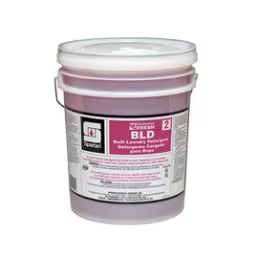
Liquid detergents are great at breaking down fats, oils, starches, proteins, and food soils, making them ideal for kitchens, hotels, fitness centers, and any operation that deals with a lot of sweat, body oils, or grease.
Because liquid detergents typically contain high surfactant loads and enzyme blends, they are exceptionally effective when used on organic soils.
However, liquids are less effective on mineral-heavy soils such as clay, sand, or hard water deposits, unless your detergent is boosted with additional alkalinity or builders.
If you are primarily laundering fats, oils, starches, proteins, or food soils, a liquid detergent is likely the right choice for you.
Water Conditions
Liquids shine in soft or moderate water conditions.
Though liquids can be used in any temperature of water, they almost always outperform powders in cold water, because they dissolve instantly and allow enzymes to activate more quickly.
In very hard water, liquids may struggle without the help of water conditioners or boosters. They have fewer built-in builders than powders, which means minerals can interfere with the laundering process if not properly treated.
If you have hard water in your facility, you will likely want to avoid using liquid detergents and opt for a powder. On the other hand, if you are committed to washing with cold water, a liquid detergent is preferred.
Dissolvability & Residue
Liquid detergents dissolve immediately in any temperature of water, leaving no granular residue on fabrics or machine parts.
This makes them an excellent choice for:
- Delicate linens
- Microfiber cloths and mop heads
- Operations where residue buildup leads to rewash cycles.
Pro Tip: Be careful not to overuse liquid detergents. They can create a soapy film on fabrics if you dose manually or without training and use too much.
If dissolvability or residue is your chief concern, choose a liquid detergent.
Cost & Operational Efficiency
Liquids and concentrated formats typically cost slightly more per wash, but the tradeoff is that it can extend the life of textiles by conditioning fabric and reducing harsh residues. Because liquid detergents work well even in colder water, they can also help you save on energy costs.
Commercial laundry operations can benefit from liquids because they typically work seamlessly with:
- Automated dispensing systems
- Color-coded chemical setups
- Low-training work environments
That being said, there are two major cost drawbacks to consider:
- Liquids are heavier than powders, which can increase shipping costs
- They require more storage space because of their bulkier containers
Pro Tip: While it’s tempting to only consider the upfront cost per bag or jug, the real cost is the total cost of operation (TCO). It includes the detergent price per wash, the labor required to measure and handle the detergent, energy costs for water heating, potential machine downtime from residue buildup, and the life span of your textiles from exposure to these chemicals.
To calculate your TCO, track rewash rates, textile replacement intervals, and labor time spent dosing and cleaning dispensers in addition to the per-wash price.
When it comes to cost, powder detergents will likely be more affordable at the point of purchase. However, keep in mind that the operational efficiency of liquid detergents may provide a lower TCO over time.
Sustainability & Packaging
Liquids have a larger carbon footprint than powders because they are mostly made up of water by weight.
Packaging typically includes:
- HDPE jugs
- Drums
- Bag-in-box containers
Some operations can offset this impact by using concentrates that reduce packaging and shipping weight.
For eco-conscious organizations, liquid detergents are likely not your best option.
Best Use Cases for Liquid Detergents

Choose liquid detergent if your operation deals with:
- Grease and oil-heavy soils
- Sweat, body oils, starches, and proteins
- Delicates or microfiber
- Cold-water washing
- Automated dispensing systems
- High staff turnover requiring simple training
Recommended Facilities
Liquid detergent is a strong match for facilities that process large amounts of linens with organic soils, operate with variable or cold temperature cycles, and benefit from automated chemical dispensing. These environments prioritize consistency, fabric care, and ease of use.
Some of the best facility types for liquid detergents include:
- Hotels and resorts handling towels, sheets, bath mats, and foodservice linens
- Restaurants and foodservice operations dealing with grease, oils, and protein soils
- Healthcare facilities, including hospitals, urgent care centers, and long-term care
- Gyms, spas, and fitness centers that launder sweat-heavy textiles and microfiber
- Commercial cleaning companies laundering microfiber cloths and mop heads
- Mixed-load operations that process everything from guest linens to F&B garments
- Facilities using cold-water or energy-saving wash programs
Operations that need reliable dissolving, minimal residue, and broad soil removal will get the most benefit from liquid detergents.
Practical Tips
- Use pump or proportioner systems to minimize waste and make repeatable dosing a breeze.
- Choose enzyme-boosted liquid detergents for protein and starch stains, or solvent-enhanced liquids for greasy soils.
- Store them in a cool, shaded area to prevent degradation of enzymes and fragrances.
Powder Laundry Detergents
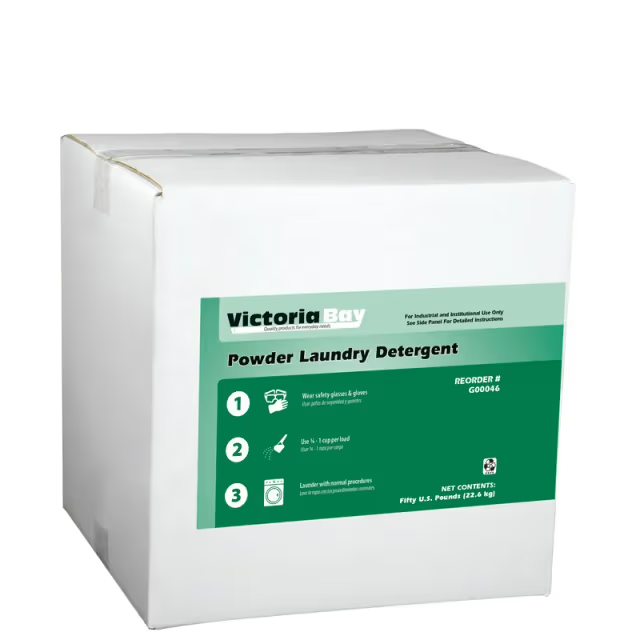
Powder detergents have been the traditional mainstay for high-volume, heavy-duty laundry operations for decades. They pack cleaning power into a dry form and often contain builders (like phosphates or zeolite alternatives) that can help soften hard water and keep soils suspended during the wash cycle. Many laundry operations choose powder because of its low cost, strong mineral handling ability, and long shelf life.
Cleaning Strength & Soil Type
Powder detergents are ideal for mineral-based soils, ground-in dirt, and hard water residue.
Many powder formulas include alkalinity builders, oxygen bleach, and anti-redeposition agents, which can help boost performance on tough stains, dingy linens, and large-scale linen service loads.
Powdered detergents can have a very high concentration of builders.
In programs that primarily deal with mineral, dirt, or hard water-based soils, a powder detergent is likely the best choice.

Water Conditions
Powders will almost always outperform liquids in hard water, thanks to their built-in water conditioners.
These builders can help prevent graying, mineral films, and soil redeposition.
Because they can cake and leave behind residue in cold water, powders should be used in hot or warm water, at least 120°F.
Pro Tip: Powders can perform well in extremely soft water too, but keep a close eye on alkalinity levels to avoid fabric damage.
If you have hard water in your facility, or are washing with warm to hot water, powder is the way to go.
Dissolvability & Residue
This is where powder detergents require a bit more attention.
As we touched on, they dissolve best in hot or warm water. In cold water or short wash cycles, powders can leave white streaks, granular residue, or even buildup in the machine drums and plumbing.
If you don’t measure correctly or use a pre-dissolver with the detergent, residue issues can increase rewash rates.
For dissolvability and residue concerns, powder may not be the most effective option for most facilities.
Cost & Operational Efficiency
Powder detergent is typically the most cost-effective option per load, typically falling between $0.10 and $0.25 per load.
It’s a strong fit for facilities looking to control their chemical spend without sacrificing cleaning performance.
Some additional financial advantages include:
- Lower shipping weight
- Longer shelf life
- Reduced risk of accidental overdosing (when using scoop measures or automated feeders)
Keep in mind that using powder detergents can increase labor and maintenance costs if they cake or leave residues. They also tend to be more harsh on textiles.
Some more drawbacks include:
- Requires dry storage
- Can create dust during handling
- Usually not compatible with automated dosing systems or all machine types
As we discussed earlier, powders offer a lower upfront cost, but liquids typically outperform powders over time in terms of TCO.
Sustainability & Packaging
Powder detergents are often packaged in cardboard boxes, poly-lined bags, or buckets.
These formats generally use less plastic than liquids and reduce your overall environmental impact if the packaging is sourced from recycled materials.
Powders also ship more efficiently because they are not water-based, leading to reduced transport emissions.
Where sustainability is concerned, powders are usually the most effective option for lowering your carbon footprint.
Best Use Cases for Powder Detergents
Choose powder detergent if your operation deals with:
- Hard water
- Clay, minerals, or ground-in soils
- Large-volume laundry with tight margins
- Hot-water wash programs
- Housekeeping linens like sheets and towels
- Industrial or maintenance textiles
Recommended Facilities
Powder detergents align best with facilities that face high-volume throughput, hard water challenges, and ground-in or mineral-based soils. It also suits operations prioritizing cost savings and strong, deep cleaning power.
Some of the best facility types for powder detergent include:
- Industrial laundries handling uniforms, shop towels, and maintenance textiles
- Manufacturing plants with clay, dust, and mineral-heavy soils
- Housekeeping departments in hotels or dormitories washing large loads of linens
- Correctional facilities prioritizing cost control and high-volume output
- Large-scale OPL operations focused on budget efficiency
- Facilities with hard water requiring built-in builders to prevent graying
- Operations using hot-water or longer wash cycles that help powder fully dissolve
Facilities with predictable soil loads, longer wash times, and tight cost-per-load targets typically see the greatest benefit from powder detergents.
Practical Tips
- Consider using a pre-dissolver or adding powders to warm water if possible to help with dissolution.
- Store in dry, climate controlled areas and use sealed hoppers or boxed packaging compatible with automated feeders to help reduce contamination and messes.
- For mixed loads with delicate fabrics, consider pairing powders with a liquid or enzyme pre-treatment.
Questions to Ask to Help You Choose the Best Laundry Detergent
Let’s put it all together. Choosing between liquid and powder commercial laundry detergents is ultimately about identifying the environment you are in, not just the detergent you prefer.
Here are some questions you can ask to help guide your decision:
- Soil Type and Linen Profile
- What are the most common soil types we encounter daily?
- Are we washing guest linens, kitchen textiles, uniforms, microfiber, or industrial fabrics?
- Do we struggle more with stains from oils or from minerals and dirt?
- Water Conditions
- Have we tested the hardness of our water supply?
- Do we regularly see issues like graying, mineral residue, or stiff fabrics?
- Are we committed to cold-water washing for energy savings?
- Equipment and Dispensing Requirements
- Are our machines compatible with automated chemical dispensers?
- How experienced is our staff? Could they benefit from simplified dosing?
- Do we run short cycles that require formulas that dissolve quickly?
- Budget and Total Cost of Ownership (TCO)
- What is our target chemical cost per load?
- Do we consistently lose money on rewashes, dingy linens, or early textile replacement?
- How much available storage space do we have for chemicals?
- How often do we ship chemicals, and what’s the freight cost?
- Sustainability and Waste Reduction
- Are we aiming to reduce plastic waste or shipping weight?
- Could we switch to a concentrated formula to help reduce inventory?
- Are we looking for recyclable packaging formats?
- Fabric Longevity and Quality Standards
- Have we noticed any fiber damage, graying, or stiffness?
- Do we launder sensitive fabrics like microfiber, delicates, or premium linen?
- Are we meeting brand or safety standards (e.g., healthcare cleanliness benchmarks)?
If your soils are mostly oily, your water is soft or cold, or your facility uses automated systems, liquid detergent is likely the best choice.
If your water is hard, your loads are large, and you’re watching the bottom line, powder detergent delivers the greatest value.
Final Tips to Help You Choose the Right Detergent
- Pilot test: Run realistic test loads for several weeks before switching formats across your entire operation.
- Reach out to Imperial Dade: We can provide SDS, performance data, and comparisons to similar facilities.
- Check compatibility: Consult your washer’s manual or manufacturer to determine which detergent formats and dosing hardwares are compatible.
- Train and document: Even the simplest products should have standardized handling procedures. Make sure SDS are on hand, dispensers are properly labeled, and that staff is properly trained and wearing PPE.
- Monitor metrics: Track chemical usage per load, rewash rates, textile life, and end user feedback to evaluate ROI.
Final Thoughts
What’s the best commercial laundry detergent? The short answer is that it depends on your business’s needs. Choosing the right detergent is an important operational decision that can influence cleaning performance, cost, textile life, staff safety, and sustainability.
Liquid detergents deliver versatility for grease and cold washes. Powders give raw cleaning power and value for heavy soils and hard water.
If you are considering switching formats, piloting is non-negotiable. Test on your typical loads, measure the results, and factor in the true cost of labor, downtime, and textile replacement in addition to the price per wash.
Ready to make the smartest choice for your facility? Reach out to your local Imperial Dade location. Our expert staff can offer the product recommendations, samples, and SDS your facility needs to get the most out of your laundry operation.